What to Consider When Writing a Will in Alberta
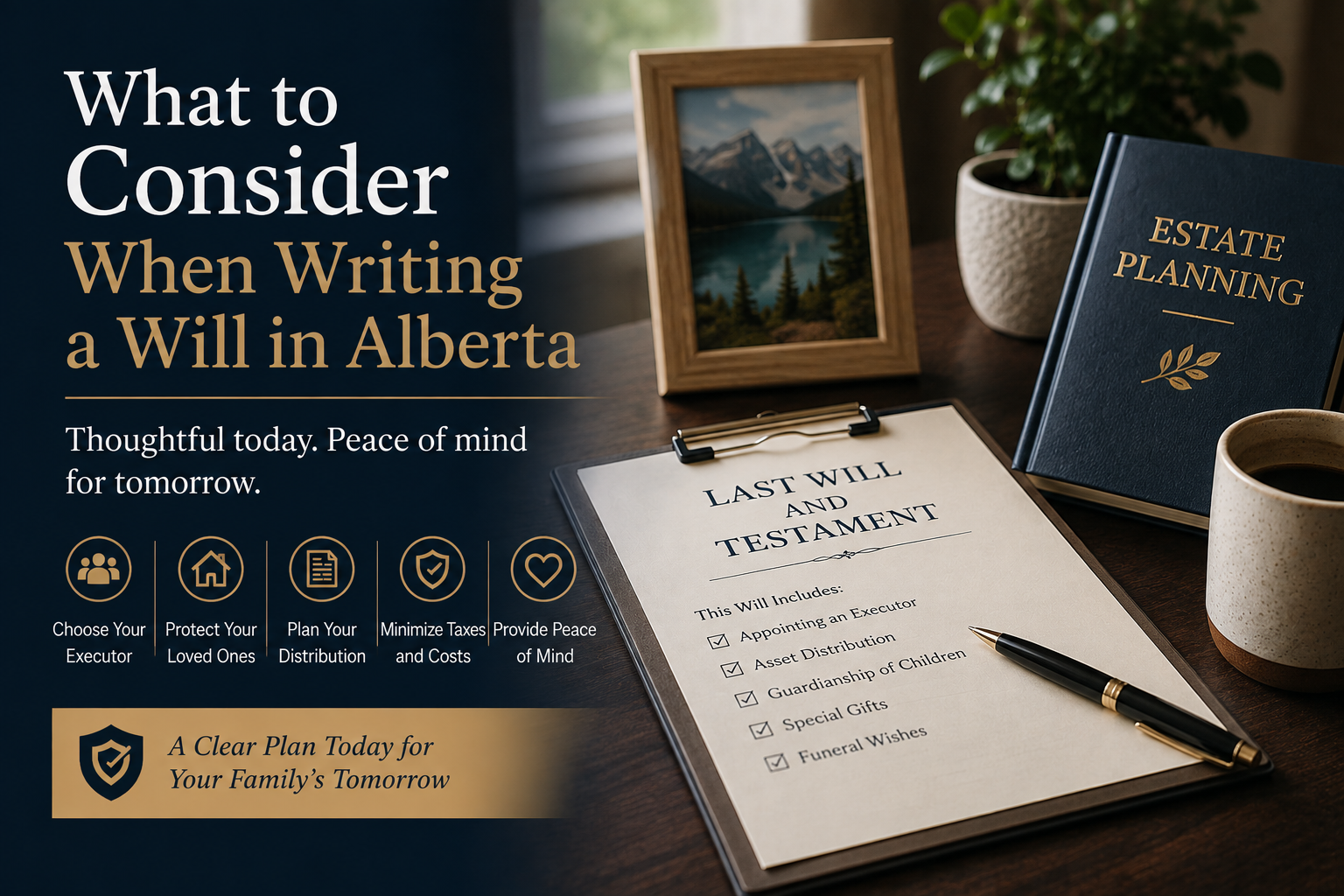
A will is one of the most important documents you will ever sign. It decides who receives your property, who looks after your children, and who is in charge of carrying out your wishes. In Alberta, wills are governed mainly by the Wills and Succession Act. If you die without a valid will, the province’s intestacy rules decide who inherits — and the result may be very different from what you would have chosen. Here is what to think about before you write one.
Who can make a will in Alberta
As a general rule, you must be at least 18 years old and have the mental capacity to understand what you own, who your natural beneficiaries are, and the effect of making a will (known as testamentary capacity). There are limited exceptions to the age requirement — for example, for minors who are married or who are members of the military.
Formal requirements for a valid will
A standard (formal) will in Alberta must be in writing, signed by you, and signed in the presence of two witnesses who are both present at the same time and who also sign the will. Importantly, a witness — or the spouse of a witness — generally should not be a beneficiary, because a gift to them can be void even though the rest of the will stands. This is why witnessing matters, and why an affidavit of witness to a will is commonly prepared to support the will later.
Alberta also recognizes a holograph will — one written entirely in your own handwriting and signed by you, with no witnesses required. These can be valid, but they carry real risks of ambiguity and challenge. Our article on holograph wills in Alberta explains when they hold up and when they cause problems. While courts have some ability to validate a will that does not perfectly meet the formalities, you should never rely on that as a plan.
Key decisions to make
- Executor: choose a trustworthy, organized personal representative — and name an alternate in case your first choice cannot act
- Beneficiaries: decide who receives what, including specific gifts and who receives the residue (what is left over)
- Guardians: if you have minor children, name who will care for them
- Trusts and timing: consider whether young beneficiaries should inherit at certain age milestones rather than all at once
- Personal items: sentimental belongings can be dealt with through a memorandum to your will
- Digital assets: plan for your online accounts and digital estate
Things people commonly forget
Some of the most valuable planning happens around the edges. Consider what happens if a beneficiary dies before you, and name alternates. Think carefully about blended families and prior obligations. Be aware that Alberta’s family maintenance and support rules mean you generally cannot completely disinherit certain dependants — they may be able to claim against the estate. If you own a company, coordinate your will with your business succession planning. And do not forget practical wishes like funeral arrangements and care for pets.
Keeping your will current
A will is not a set-and-forget document. Review it after major life events — marriage, separation or divorce, the birth of children, a death in the family, or a significant change in assets. In Alberta, marriage no longer automatically revokes a will, but a divorce generally cancels gifts to a former spouse. Regular reviews keep your will aligned with your life.
Related documents to consider
A will only takes effect when you die. To cover the possibility that you become unable to manage your own affairs while alive, most Albertans also put in place an enduring power of attorney (for financial matters) and a personal directive (for health and personal decisions). Together, these three documents form a complete plan.
Frequently asked questions
Do I need a lawyer to write a will in Alberta?
It is not legally required, but a lawyer helps ensure your will is valid, clear, and does what you intend — avoiding the ambiguities and formality problems that lead to disputes and delays.
Is a handwritten will valid in Alberta?
A holograph will — entirely in your own handwriting and signed — can be valid without witnesses, but it is easier to challenge and often unclear. A properly witnessed will is far safer.
Does getting married cancel my will in Alberta?
No. Under current Alberta law, marriage does not revoke an existing will. However, divorce generally revokes gifts to a former spouse, so a review after any major change is wise.
Ready to make or update your will? Libra Law guides Calgary and Alberta families through clear, valid estate planning with care and discretion. Learn about our wills and estates services, call or text +1 (587) 438-2051, or book a consultation.
This article provides general information about Alberta law and is not legal advice. Every situation is different. For advice about your specific circumstances, please speak with a lawyer at Libra Law.
