Memorandum to a Will: Distributing Personal Belongings in Alberta
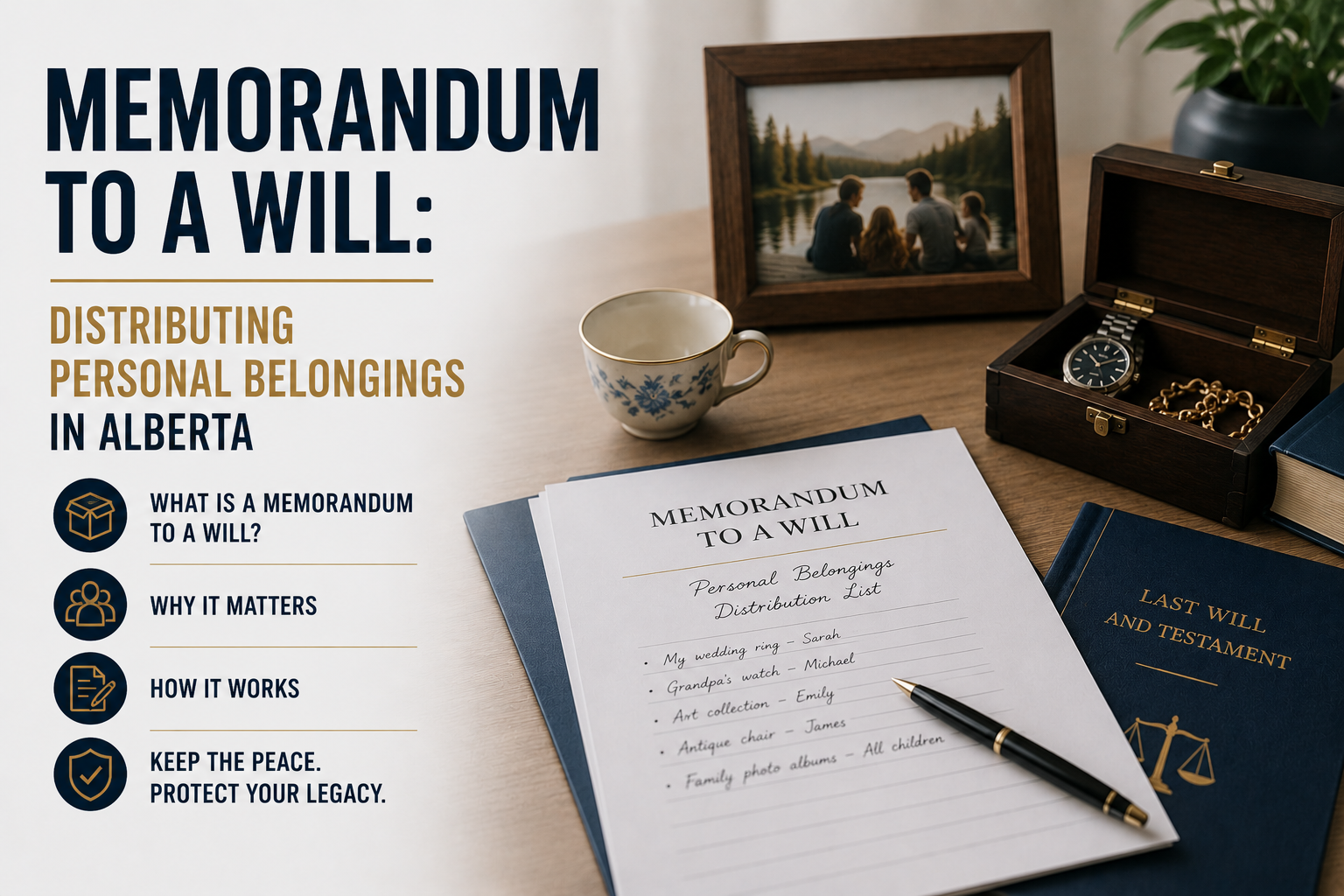
Some of the most emotionally charged disputes after a death are not about money at all. They are about belongings: a grandmother's ring, a watch, a painting, a piece of furniture passed down through generations. These items carry sentimental value far beyond their price, and disagreements over them can fracture families. A memorandum to a will is a practical tool that lets you specify who receives particular personal items without the burden of rewriting your entire will each time you change your mind.
What a Memorandum to a Will Is
A memorandum is a separate document that lists specific personal belongings and the people you want to receive them. It works together with your will to deal with items of sentimental or modest value, such as jewellery, heirlooms, collections, and household effects. Instead of cluttering your will with a long list of small bequests, you reference the memorandum in your will and keep the detailed list in the accompanying document.
Binding Versus Non-Binding Memoranda
An important distinction is whether the memorandum is legally binding. A memorandum prepared and incorporated correctly, and in existence when the will is signed, may be treated as part of the will and binding. A memorandum that is simply a wish list, often called precatory, expresses your preferences but leaves the final decision to your executor. Both have their uses, and which approach suits you depends on how much certainty you want and how often you expect to update the list.
Because the rules around incorporating a document into a will are technical, it is worth confirming how your memorandum will be treated when you prepare your will. Getting this wrong can mean the memorandum is ignored entirely.
Why People Use a Memorandum
- Flexibility. You can update the list of items as you acquire new belongings or change your mind, often without re-executing your whole will, depending on how it is set up.
- Reduced conflict. Clearly recording your wishes for sentimental items helps prevent the arguments that so often arise among family members.
- Simplicity. It keeps the main will focused on major assets while still addressing the smaller, personal ones.
Practical Tips for an Effective Memorandum
To make your memorandum work as intended, describe each item clearly enough that there is no confusion, and identify each recipient by full name. Store the memorandum with your will so your executor can find it. Date the document, and follow your lawyer's guidance on signing requirements so it is treated the way you intend. Review it whenever your collection of belongings or your relationships change.
What a Memorandum Should Not Be Used For
A memorandum is intended for personal and household items, not for major assets. Significant property, such as real estate, business interests, investment accounts, and substantial sums of money, belong in the will itself, where the formalities provide certainty. Trying to dispose of major assets through an informal memorandum can create confusion and disputes. Keeping the memorandum focused on tangible personal belongings is what makes it both useful and reliable.
Why Personal Items Cause Outsized Conflict
It can seem surprising that families argue more over a ring or a piece of furniture than over money, but the reason is that these items are irreplaceable and tied to memory. Two siblings can split a bank account evenly; they cannot split a single heirloom. When a parent leaves no instructions, surviving family members are left to guess at intentions, and each person's memory of what was promised may differ. A memorandum removes the guesswork by recording your wishes in your own words so you can express them clearly.
Don't Leave Sentimental Items to Chance
The objects we leave behind often mean the most to the people we love. A well-drafted memorandum ensures the right items reach the right hands and spares your family painful disputes. Libra Law helps Calgary clients prepare wills and accompanying memoranda that reflect their wishes. To put your plan in place, contact our wills and estates team, learn more about our wills and estates services, or read further in our articles.
Disclaimer: This article is for general informational purposes only and does not constitute legal advice. To obtain advice specific to your situation, please consult a lawyer or qualified professional.
