How to Reduce the Risk of Wrongful Dismissal Claims in Alberta
Ending an employment relationship is one of the riskiest things a business does. Handled poorly, a termination can turn into a wrongful dismissal claim that costs far more than the situation ever warranted. Handled properly, most of that risk can be managed. This article is written for Alberta employers who want to let an employee go the right way.
What "wrongful dismissal" actually means
Wrongful dismissal does not mean the decision to end employment was morally wrong. In law, it means the employee was not given the notice — or the pay in place of notice — that they were entitled to when their employment ended. There are two layers to that entitlement: the minimum standards set by Alberta’s Employment Standards Code, and, on top of that, the often larger amount owed under the common law of "reasonable notice."
Termination with cause vs. without cause
"Just cause" — dismissing someone for serious misconduct without any notice or pay — is a high bar and is often difficult to prove. Most terminations are properly done "without cause," which is entirely lawful as long as the employer provides appropriate notice or pay. A common and costly mistake is alleging cause, failing to prove it, and ending up owing more than if the employer had simply provided a fair package from the start.
How much notice or pay is owed
The Employment Standards Code sets minimum termination notice or pay based on length of service. But common law reasonable notice is usually the bigger number. Courts weigh factors such as the employee’s age, length of service, the nature of the position, and how easily they can find comparable work. Unless a valid written contract limits the entitlement, these amounts can be substantial — which is why understanding severance pay in Alberta and how severance packages are structured is so important.
Steps to reduce your risk
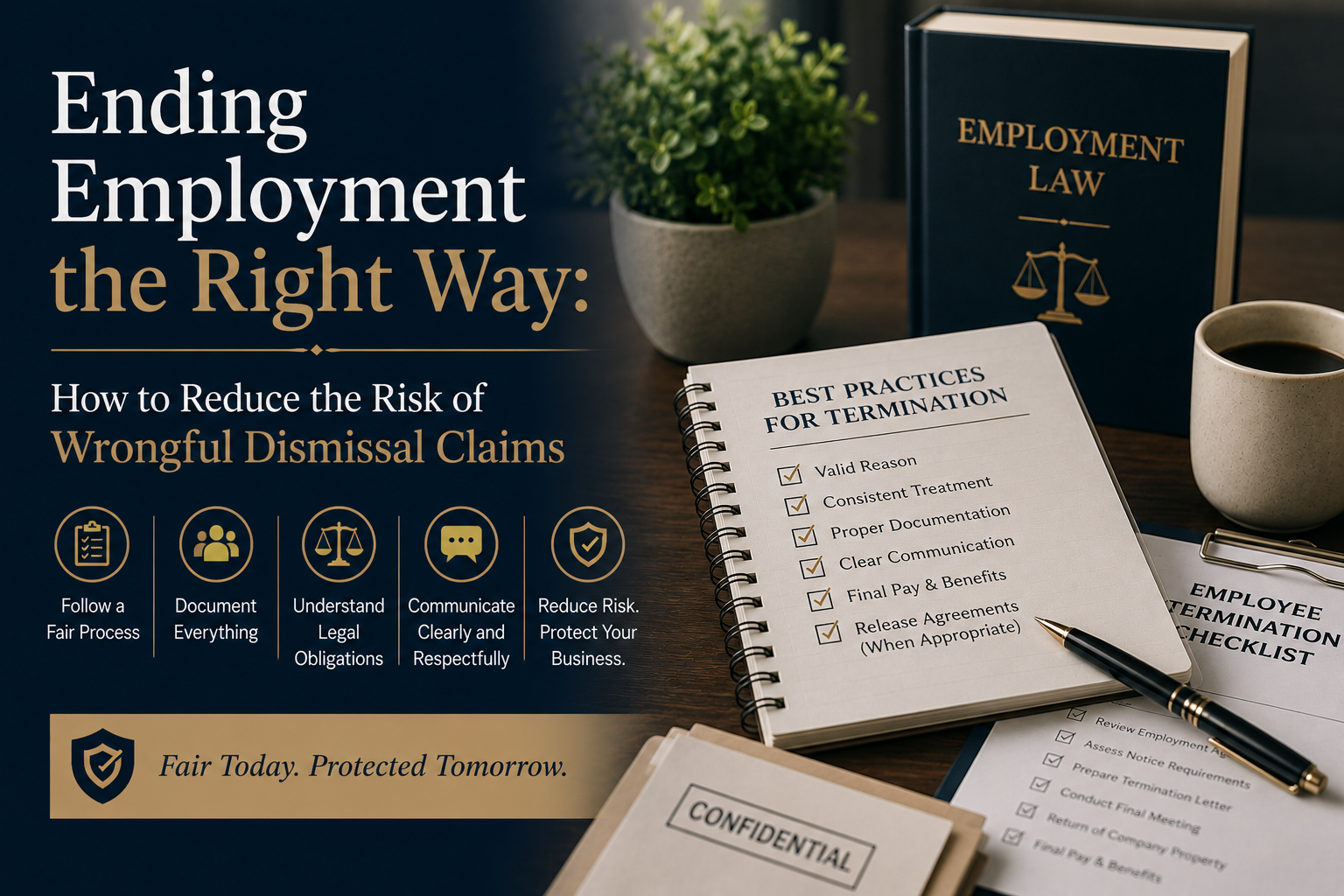
- Use clear written employment contracts
A well-drafted contract with an enforceable termination clause can limit an employee’s entitlement to the statutory minimums. To hold up, it must be drafted carefully and supported by proper consideration — see our article on fresh consideration in employment contracts.
- Be careful with "just cause"
Reserve cause for genuinely serious situations, and get advice before relying on it. In most cases, terminating without cause and providing a fair package is the lower-risk path.
- Provide proper notice or pay
Give the notice or pay in lieu that the law requires, and consider offering a reasonable severance package to resolve matters cleanly and finally.
- Document performance issues as they happen
Contemporaneous records of concerns, warnings, and support offered are far more persuasive than an after-the-fact explanation.
- Handle the termination professionally
Treat the departing employee with respect. Bad-faith or callous conduct during a dismissal can increase the damages a court awards.
- Get a signed release
A severance package offered in exchange for a signed release brings finality and closes the door on future claims — when done correctly.
- Watch for constructive dismissal
Significant unilateral changes to pay, duties, or reporting can amount to a dismissal even if you never used the word "fired." Avoid the trap of thinking only formal terminations create liability, and be mindful of related obligations such as non-compete clauses.
The value of getting it right
A properly handled termination gives you a predictable cost, a faster resolution, and protection for your reputation and your remaining team. Avoiding the common employment law mistakes Alberta employers make is almost always cheaper than defending a claim.
Frequently asked questions
How much severance do Alberta employees get?
It depends on the Employment Standards Code minimum plus, in most without-cause cases, common law reasonable notice based on factors like age, service, and position — unless a valid contract limits it.
Can I fire someone for just cause to avoid paying severance?
Only if you can actually prove serious misconduct. Just cause is a high bar. Alleging cause and failing can leave you owing more than a straightforward without-cause package.
What is constructive dismissal?
It occurs when an employer makes a fundamental unilateral change — such as cutting pay or demoting someone — that effectively ends the original employment, allowing the employee to treat it as a dismissal.
Planning a termination or reviewing your contracts? Libra Law helps Alberta employers manage employment matters proactively and reduce risk. See our employment law services, call or text +1 (587) 438-2051, or contact us before you act.
This article provides general information about Alberta law and is not legal advice. Every situation is different. For advice about your specific circumstances, please speak with a lawyer at Libra Law.
