Notary Public vs. Commissioner for Oaths in Alberta: Which One Do You Need?
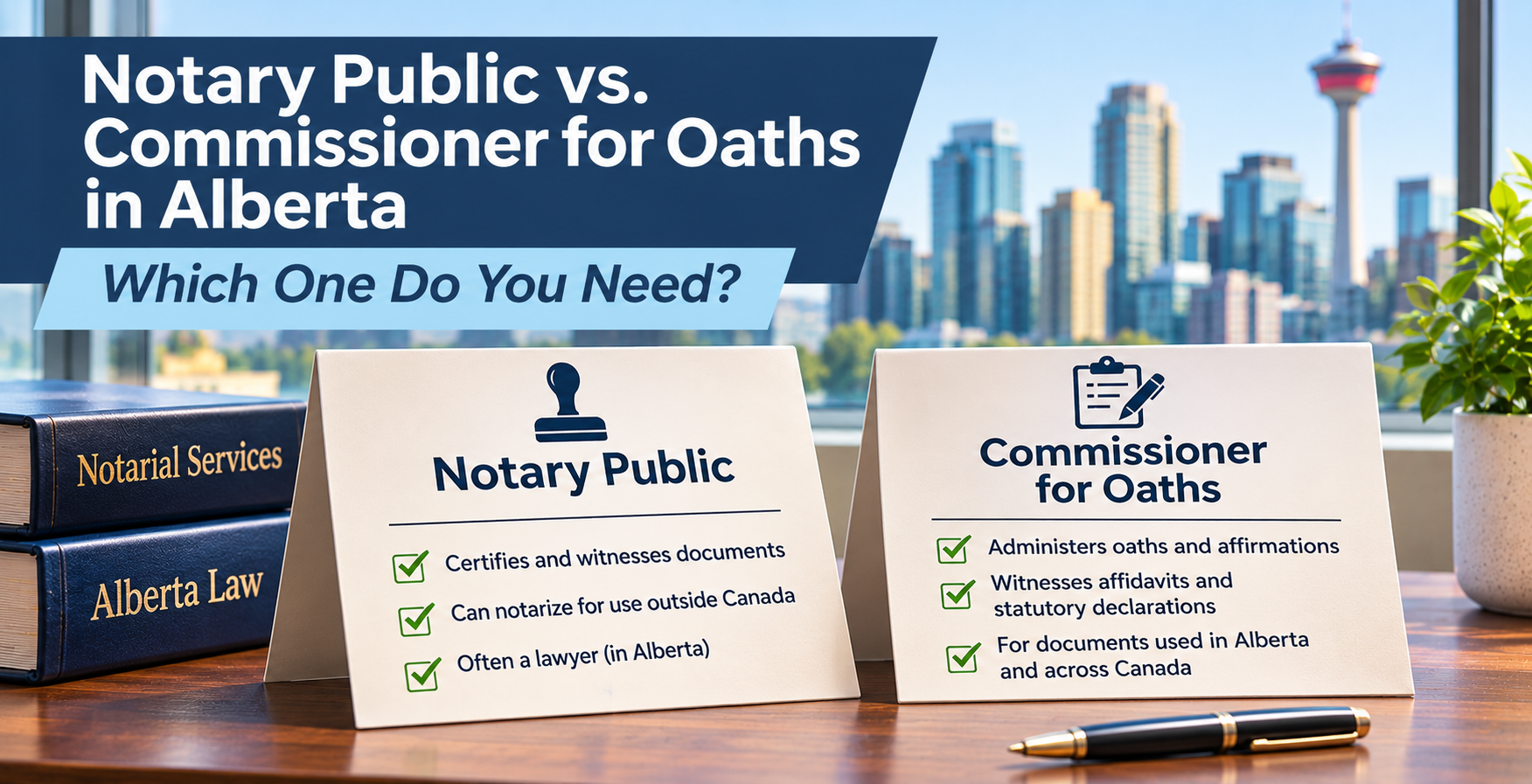
You have a document that says it must be "sworn before a commissioner for oaths" or "notarized." Or perhaps it does not say, and you are not sure who can sign it.
The difference matters. Using the wrong official can mean the document is rejected by a bank, government office, court, or foreign authority, and you have to start again.
In Alberta, both notaries public and commissioners for oaths are governed by the Notaries and Commissioners Act. They overlap in some areas, but their powers are not the same.
This guide from Libra Law's Notarial Services team explains what each official can do, which one your document is likely to need, and when a lawyer is specifically required.
What Is a Commissioner for Oaths?
A commissioner for oaths is authorized to administer oaths and take affidavits, statutory declarations, and affirmations for use in Alberta.
In practical terms, a commissioner confirms your identity, has you swear or affirm that the contents of the document are true, watches you sign, and then signs the document with the required details.
Some people are commissioners because of their office or status, such as lawyers and students-at-law. Others are appointed by the Minister of Justice after meeting eligibility requirements and passing an examination. Appointed commissioners generally hold their appointment for a set term.
What Is a Notary Public?
A notary public has broader powers. In addition to everything a commissioner can do, a notary public can generally:
- certify that a copy of a document is a true copy of the original
- witness and attest signatures
- verify documents for use outside Alberta
- prepare notarial certificates for documents going to other provinces or countries
Every notary public in Alberta is also a commissioner for oaths. The reverse is not true: a commissioner for oaths cannot act as a notary public.
Lawyers who are members of the Law Society of Alberta, and students-at-law, are notaries public by virtue of their status. Non-lawyers can also be appointed as notaries public, but their powers are more limited and are often restricted to particular purposes.
Quick Comparison
Commissioner for oaths
Administers oaths and takes affidavits, statutory declarations, and affirmations, mainly for documents used in Alberta.
Notary public
Can do everything a commissioner can do, plus certify true copies, witness and attest signatures, and prepare documents for use outside Alberta.
Which One Does Your Document Need?
Start with the document itself and the instructions from whoever will receive it.
A commissioner for oaths is often sufficient for:
- affidavits filed in Alberta court proceedings
- statutory declarations required by Alberta organizations
- many forms for Alberta government programs
A notary public is usually needed for:
- certified true copies of passports, degrees, or other identity documents
- documents being sent to another province or country
- documents that state they must be notarized
- witnessing signatures where the recipient requires a notary's seal
If a document says "commissioner for oaths" but is going outside Alberta, check with the recipient. Many out-of-province and foreign recipients will only accept a notary.
Our article on affidavits vs. statutory declarations in Alberta explains the difference between those two types of sworn documents.
Documents Going Outside Canada
Documents for use in another country may need more than a notary's signature.
Canada joined the Hague Apostille Convention, and it took effect for Canada on January 11, 2024. For countries that are part of the Convention, many documents can now be authenticated with an apostille rather than going through the older multi-step legalization process. Documents going to countries outside the Convention may still require legalization.
Whether your document needs a notary first, and which authority issues the apostille, depends on the type of document. Our guide to apostille and document authentication in Alberta walks through the process.
When Only a Lawyer Will Do
Some documents require more than a notary or commissioner. One important Alberta example is a personal guarantee.
Under Alberta's Guarantees Acknowledgement Act, an individual who signs certain guarantees must appear before a lawyer, who confirms the person understands the guarantee and completes a certificate. A non-lawyer notary or commissioner cannot complete that certificate.
Lawyers may also be required where a document involves legal advice, such as reviewing the terms of an agreement before it is signed.
What to Bring to Your Appointment
To avoid delays, bring:
- the original, unsigned document. Do not sign it in advance, as you usually need to sign in front of the official
- valid government-issued photo identification
- any originals needed for certified copies
- any instructions from the organization or foreign authority that will receive the document
If the document is in a language other than English, the official may need a translation, or may need to confirm that you understand what you are swearing to.
Common Mistakes
- signing the document before the appointment
- assuming any commissioner can certify a copy of a passport or degree
- using a commissioner for a document going outside Alberta without checking the recipient's requirements
- forgetting that a personal guarantee may require a lawyer under Alberta law
- missing pages or exhibits that need to be stamped or referenced
Frequently Asked Questions
Can a commissioner for oaths certify a true copy in Alberta?
Generally, no. Certifying true copies is a notary public's function. A commissioner for oaths administers oaths and takes affidavits and declarations.
Are all lawyers in Alberta notaries public?
Lawyers who are members of the Law Society of Alberta are notaries public and commissioners for oaths by virtue of their status.
Do I need a notary for a document going to another country?
Usually, yes. Documents for use outside Alberta generally require a notary public, and some will also need an apostille or legalization.
Can a notary sign a personal guarantee certificate in Alberta?
Only a lawyer can complete the certificate required under the Guarantees Acknowledgment Act. A non-lawyer notary or commissioner cannot.
Final Thoughts
Commissioners for oaths and notaries public both play important roles, but they are not interchangeable. A commissioner is often enough for sworn documents used in Alberta. A notary is usually needed for certified copies, witnessed signatures, and documents going elsewhere.
Checking the recipient's requirements before your appointment can save time and prevent a document from being rejected.
Libra Law's Notarial Services team provides notarizations, commissioning of affidavits and statutory declarations, certified true copies, and help with documents going outside Canada.
Book notarial services with Libra Law to have your documents completed correctly the first time.
Disclaimer: This article is for general informational purposes only and does not constitute legal advice. To obtain advice specific to your situation, please consult a lawyer or qualified professional.
