Affidavit vs. Statutory Declaration in Alberta: Key Differences
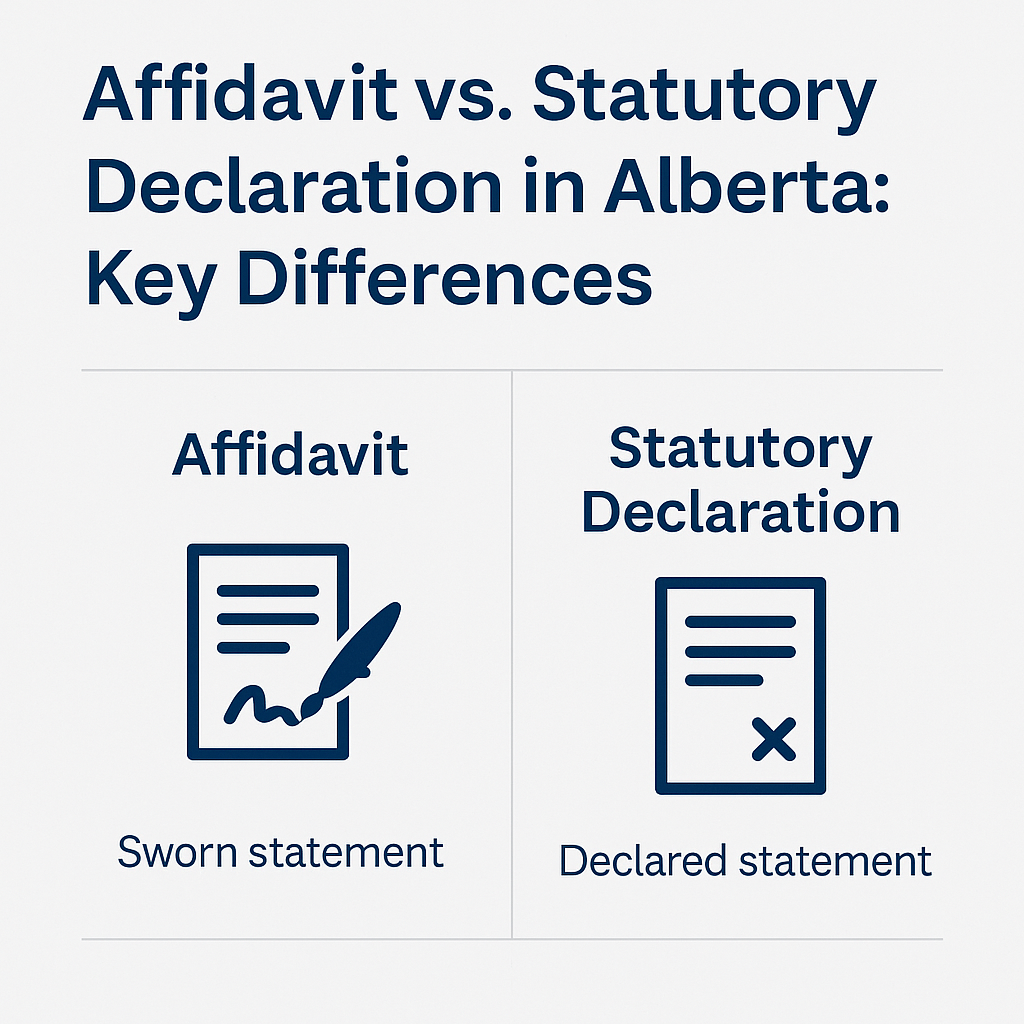
If you have ever been asked to sign a document before a notary or commissioner for oaths, you may have encountered the terms affidavit and statutory declaration. Although these documents appear similar, they serve distinct purposes under Alberta law and are used in different legal contexts.
This guide from the Notarial Services team at Libra Law explains what each document is, how they differ, and when you might need one.
What Is an Affidavit?
An affidavit is a written statement of facts that you swear to be true before a commissioner for oaths or a notary public. The key feature of an affidavit is that it involves an oath or affirmation, which means the person signing is making a legally binding promise to tell the truth.
Affidavits are often used in legal proceedings such as court cases, immigration applications, and business transactions. Common examples include:
- Confirming facts in a civil court claim
- Providing evidence for a family law matter
- Supporting an application for a name change or lost document
- Swearing ownership of property or assets
Because an affidavit carries the same weight as oral testimony in court, knowingly making a false statement can lead to charges of perjury under the Criminal Code of Canada.
What Is a Statutory Declaration?
A statutory declaration is also a written statement of facts, but it does not involve an oath or religious affirmation. Instead, you declare that the information provided is true to the best of your knowledge.
Statutory declarations are commonly used in non-court settings where an official confirmation is required but no legal proceeding is involved. Examples include:
- Declaring residency or marital status
- Confirming loss of an identification document
- Certifying the accuracy of information in business or government forms
- Verifying identity or address for official applications
Unlike affidavits, statutory declarations are governed by the Canada Evidence Act and Alberta’s Evidence Act, depending on the document’s purpose and where it will be used.
Key Differences Between an Affidavit and a Statutory Declaration
Although both documents serve to confirm facts, the key differences lie in their formality and use.
An affidavit is sworn under oath, meaning the person signing promises before a commissioner or notary that their statement is true. This is typically required in court-related or formal legal proceedings.
A statutory declaration, on the other hand, does not include an oath. It is a simple declaration of truth used primarily for administrative, business, or government matters where no court involvement is necessary.
In both cases, the signature must be witnessed by an authorized person such as a notary public or commissioner for oaths in Calgary to make the document legally valid.
When You Might Need Each Document
You may need an affidavit when:
- Preparing evidence for court or tribunal matters
- Making formal statements in legal disputes
- Swearing to the truth of facts for a property, financial, or family law case
You may need a statutory declaration when:
- Dealing with government forms, applications, or certifications
- Declaring facts outside of a court setting
- Replacing lost official documents or confirming information for records
If you are unsure which document is required, a notary in Calgary can review your situation and prepare the appropriate legal form.
How to Prepare and Sign These Documents
To ensure your affidavit or statutory declaration is valid, it must meet certain requirements under Alberta law:
- It must be in writing and signed voluntarily.
- It must be sworn or declared before an authorized notary public or commissioner for oaths.
- The person witnessing your signature must verify your identity and confirm you understand the contents.
The document does not need to be drafted by a lawyer, but professional guidance ensures it meets the standards required for acceptance by courts, government agencies, or other institutions.
Learn more about our Notarial Services in Calgary, including affidavits, statutory declarations, certified true copies, and document notarization.
Final Thoughts
Affidavits and statutory declarations both confirm facts in writing, but they are not interchangeable. Knowing which one to use depends on the purpose of your document and whether it will be used in a legal proceeding.
Working with an experienced notary public or commissioner for oaths helps ensure your documents are correctly prepared, witnessed, and legally binding.
Schedule a notary appointment with Libra Law today to have your affidavit or statutory declaration properly completed in accordance with Alberta law.
Disclaimer: This article is for general informational purposes only and does not constitute legal advice. To obtain advice specific to your situation, please consult a lawyer or qualified professional.
