Debt After Death: How Debts Are Handled in Alberta Estates | Libra Law
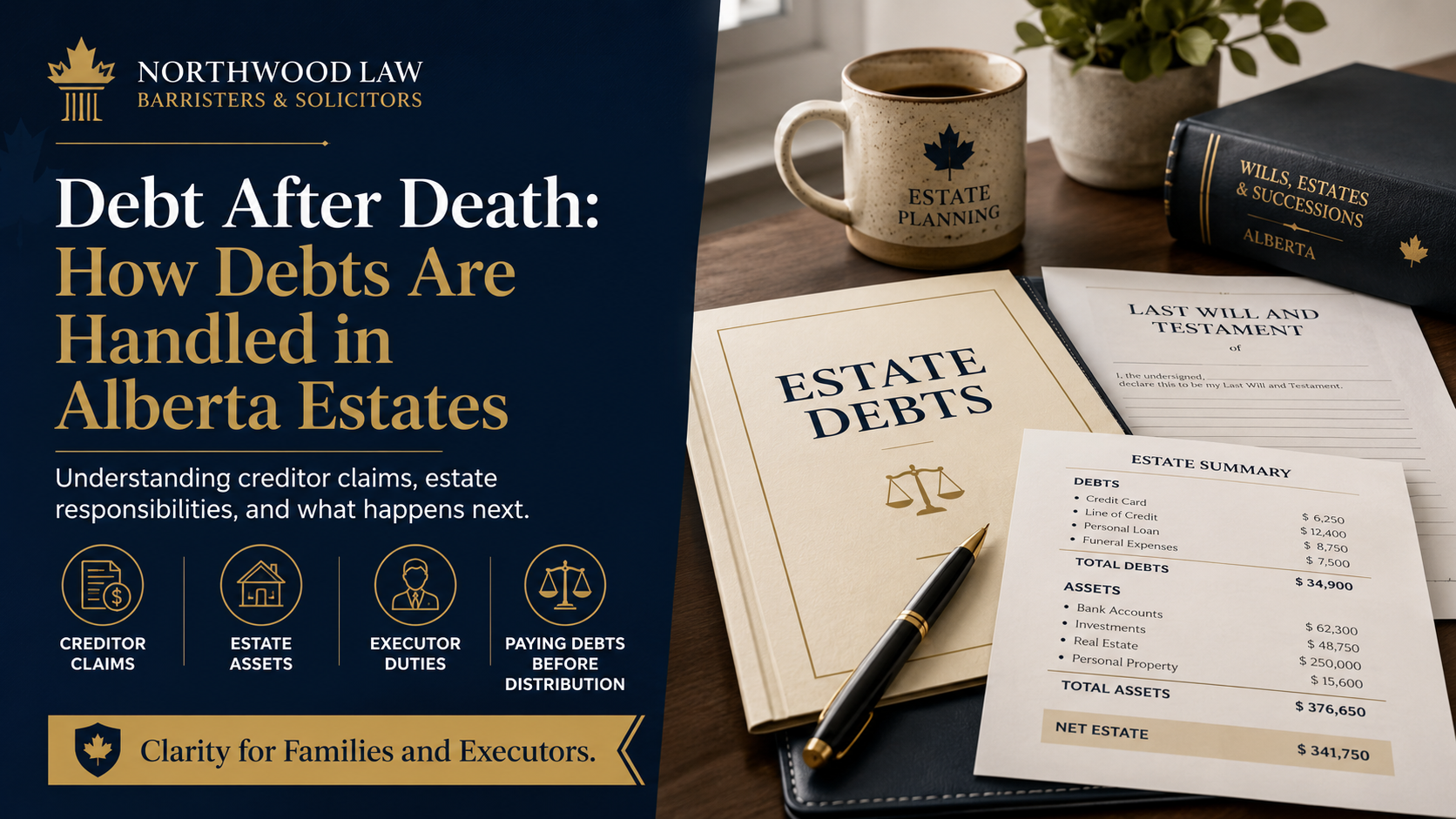
When someone passes away, their debts do not simply vanish — but families are often relieved to learn that they usually are not personally responsible for them. In Alberta, a person’s debts are generally paid out of their estate before anything is distributed to beneficiaries. Here is how it works, and when someone other than the estate might be on the hook.
Debts are paid by the estate, not the family
The estate — the pool of assets the deceased left behind — is responsible for their debts. The personal representative (executor) uses estate assets to pay valid debts before distributing what remains to the beneficiaries. As a general rule, beneficiaries do not inherit the deceased’s debts, and family members are not personally liable simply because they are related.
When someone else can be responsible
There are important exceptions. A person can be personally responsible for a deceased’s debt where they:
- Held a joint debt or joint account with the deceased
- Co-signed or gave a personal guarantee for the debt
- Are a joint owner of mortgaged property
- Are the executor and distributed the estate improperly (discussed below)
A spouse is not automatically liable for the other spouse’s individual debts just by being married.
The executor’s duty to creditors
A personal representative must identify and pay the estate’s valid debts before distributing to beneficiaries. This is a serious responsibility: if an executor distributes the estate and leaves known creditors unpaid, they can be held personally liable for the shortfall. Getting this sequence right is part of the executor’s job, alongside their other core duties and compensation.
When the estate cannot pay everything
If an estate does not have enough to cover all its debts (an insolvent estate), there is an order to how obligations are paid. Secured creditors are generally paid from the assets securing their loans first, followed by certain priority claims such as funeral expenses and taxes, and then unsecured creditors. Beneficiaries only receive what is left over. Where assets are insufficient, some debts may go unpaid — but they typically are not passed on to heirs.
Protecting the executor: notice to creditors
To reduce the risk of unknown claims surfacing later, an executor can publish a formal notice to creditors and claimants, inviting anyone owed money to come forward within a set period. This helps the executor distribute more safely. The timing and process matter, and they connect to other decisions like whether a removal of the personal representative may be needed if things go wrong — all of which are easier when the will was well drafted in the first place.
How specific debts are handled
- Mortgages: secured against the property; the estate or heir must keep paying or the home may be sold to satisfy the debt
- Credit cards and lines of credit: unsecured; paid from the estate to the extent funds allow
- Taxes: a final tax return is required, and the Canada Revenue Agency’s claims carry priority
- Business debts: may involve the company itself — see our article on the death of a shareholder in a private company
- Student loans: federal student loans may be forgiven on death
Frequently asked questions
Are children responsible for a parent’s debts in Alberta?
Generally no. A parent’s debts are paid from their estate, not by their children — unless a child co-signed, guaranteed, or held the debt jointly with the parent.
What happens to a mortgage when the owner dies?
The mortgage remains attached to the property. The estate or a joint owner must continue payments, refinance, or sell the home. It does not simply disappear on death.
Can creditors go after life insurance or a joint account?
Assets with a named beneficiary, like most life insurance, usually pass outside the estate and are generally protected from estate creditors. Jointly held assets often pass to the surviving owner. Specific facts matter, so get advice.
Administering an estate or worried about debts? Libra Law helps Calgary and Alberta executors and families handle estate obligations correctly and with care. Explore our wills and estates services, call or text +1 (587) 438-2051, or reach out.
This article provides general information about Alberta law and is not legal advice. Every situation is different. For advice about your specific circumstances, please speak with a lawyer at Libra Law.
