Goodwill When Selling a Business in Alberta: Why It Matters
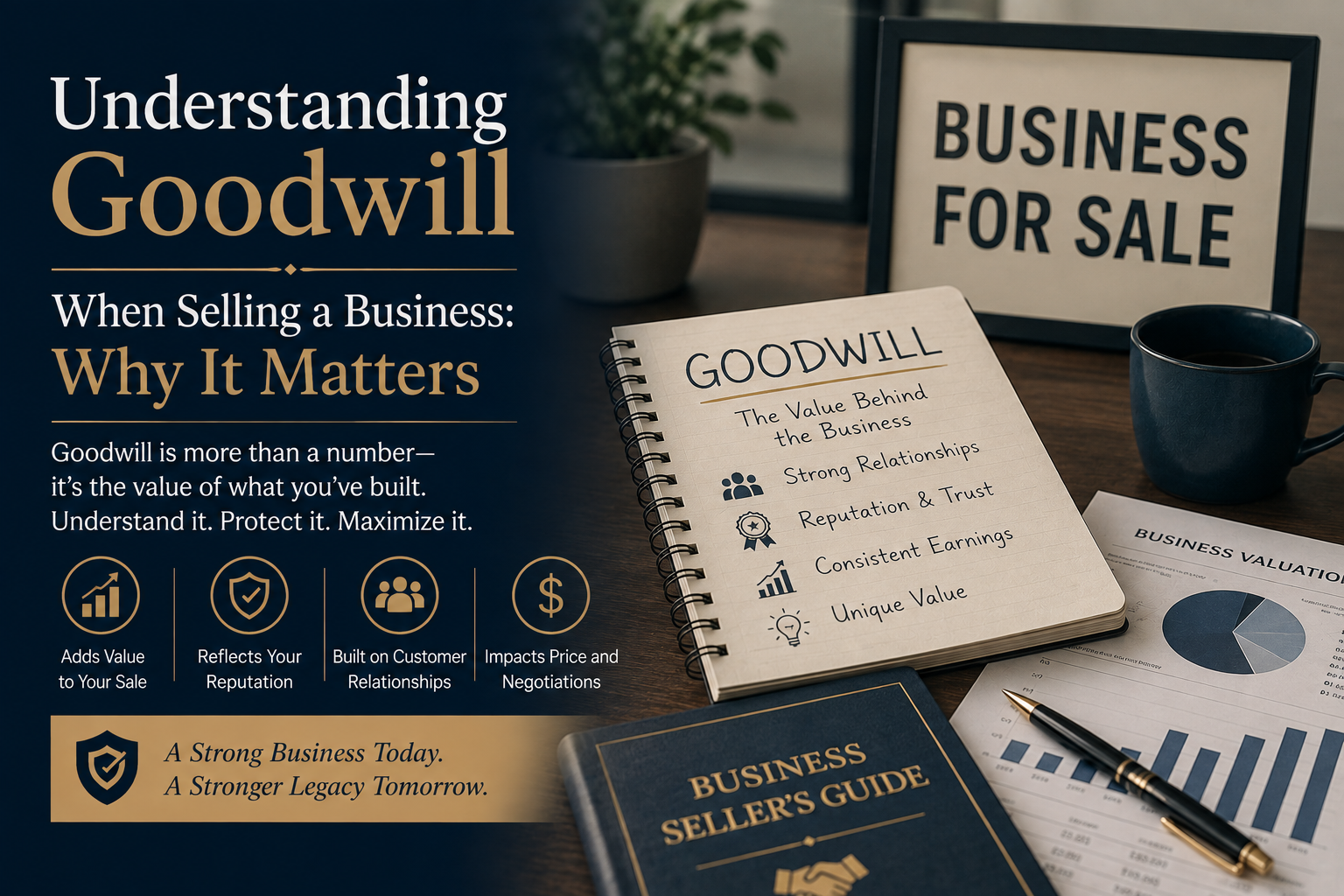
When you sell a business, the price almost always reflects more than the desks, equipment, and inventory. A large part of the value — sometimes most of it — is goodwill: the intangible worth built up through reputation, customer relationships, and momentum. For many Alberta business owners, goodwill is the most valuable and the most negotiated part of the deal, yet it is also the most misunderstood.
What is goodwill?
Goodwill is the value of a business beyond its identifiable tangible and financial assets. It captures the things that make an established business worth more than the sum of its parts: a strong reputation and brand, a loyal customer base, established supplier and referral relationships, a good location, trained staff, proven systems, and reliable recurring revenue. It is the reason a profitable, well-run business sells for more than the value of its equipment.
Personal goodwill vs. enterprise goodwill
A crucial distinction is between personal goodwill and enterprise goodwill. Personal goodwill is tied to the owner as an individual — their personal relationships, reputation, and skill. Enterprise (or commercial) goodwill belongs to the business itself and continues after the owner leaves. Buyers are really paying for transferable enterprise goodwill. Personal goodwill has to be transferred deliberately — usually through a transition period and restrictive covenants — or it walks out the door with the seller.
Why goodwill matters in the deal
Goodwill drives the purchase price, shapes how the deal is structured, and has significant tax consequences for both buyer and seller. It also needs to be protected so that the buyer actually receives the value they are paying for rather than watching customers follow the seller elsewhere.
Asset sale vs. share sale
How goodwill is handled depends on the deal structure. In a share sale, the buyer purchases the company, and the goodwill stays inside it. In an asset sale, goodwill is a specific asset being purchased, and the total price is allocated across the different classes of assets. That allocation matters a great deal for tax on both sides, which is one of many reasons to involve a lawyer and an accountant early in any business sale.
Protecting goodwill in the agreement
A well-drafted purchase agreement protects the goodwill a buyer is paying for. Common tools include:
- Non-competition and non-solicitation covenants — reasonable in scope, time, and geography so they are enforceable (our article on non-compete clauses in Alberta explains why drafting matters)
- A transition or training period where the seller introduces customers and hands over relationships
- Retention of key employees and important customer accounts
- Representations and warranties about the state of the business
- Holdbacks or earn-outs that tie part of the price to retained business
- Conditions to closing that must be satisfied first — see our overview of conditions precedent in Alberta deals
Common pitfalls
Sellers and buyers alike get tripped up by goodwill. Buyers sometimes overpay for personal goodwill that leaves with the owner. Non-competes that are drafted too broadly can be unenforceable, leaving the goodwill unprotected. Purchase-price allocation is often rushed, creating tax surprises. And personal guarantees or obligations tied to a shareholder’s exit are overlooked. The common thread is that goodwill needs to be understood and documented — not assumed — which is where a solid set of contracts comes in.
Frequently asked questions
How is goodwill valued in a business sale?
Goodwill is usually valued as the amount by which the total business value exceeds its identifiable net assets, often supported by earnings-based valuation methods. A professional valuation is common for larger deals.
Can a non-compete really protect goodwill?
Yes, when drafted reasonably. A covenant that is limited in time, geography, and scope is more likely to be enforced. Overly broad restrictions risk being struck down entirely.
Is goodwill taxed differently than other assets?
Goodwill has its own tax treatment, and how the purchase price is allocated affects both buyer and seller. This is an area where accounting and legal advice pays for itself.
Buying or selling a business in Alberta? Libra Law helps owners structure and protect their deals — including the goodwill that makes a business valuable. Explore our business law services, call or text +1 (587) 438-2051, or get in touch.
This article provides general information about Alberta law and is not legal advice. Every situation is different. For advice about your specific circumstances, please speak with a lawyer at Libra Law.
