Wrongful Dismissal in Alberta: What Compensation Can You Claim?
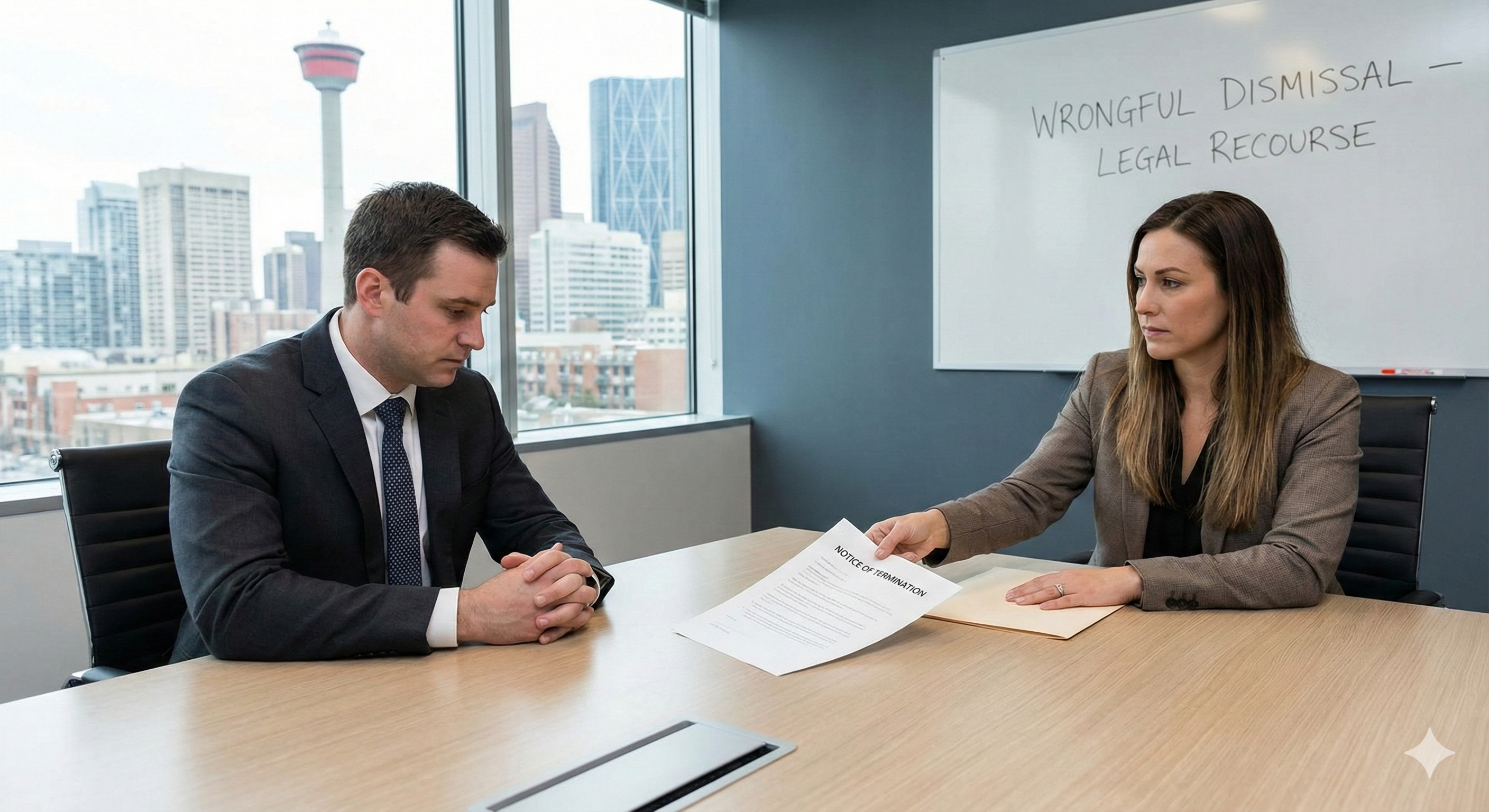
Being dismissed from your job is stressful, especially when the termination feels sudden, unfair, or financially disruptive. Many employees in Alberta are not aware that the severance offered by their employer—if any—is often far less than what they are legally entitled to. In many cases, employees can claim significant compensation under common law Alberta principles.
This guide explains what wrongful dismissal is, how compensation is calculated, what employers must consider before terminating an employee, and when you should speak with an employment lawyer. Whether you were recently let go or want to understand your workplace rights Alberta laws, this article provides a clear explanation of your options.
What Is Wrongful Dismissal in Alberta?
Wrongful dismissal occurs when an employer terminates an employee without providing proper notice or adequate severance under Alberta law.
It does not mean the employer was rude or unfair (although that may factor into additional damages). Instead, wrongful dismissal refers to whether the termination compensation meets the legal requirements.
There are two main systems that determine proper severance in Alberta:
- Employment Standards Code – sets minimum notice periods.
- Common law Alberta – sets significantly higher "reasonable notice" requirements based on court decisions.
Most employees are entitled to far more under common law than the minimums their employer offers.
Common Misconceptions About Wrongful Dismissal
Many employees mistakenly believe:
- They have no rights because they were on probation
- They must accept the severance offered immediately
- Verbal agreements cannot be enforced
- A termination clause in their contract automatically limits their severance
- They cannot challenge the dismissal because they were not a “perfect” employee
- Employees terminated “without cause” get nothing
None of these statements are true in most cases.
Even if your employer claims the contract limits your severance, many termination clauses are legally invalid. The default in Alberta is generous common law notice, often far exceeding what employers initially offer.
Wrongful Dismissal vs. Termination Without Cause
Termination without cause is legal in Alberta—as long as adequate notice or severance is provided.
Wrongful dismissal occurs when:
- The employer fails to provide enough severance
- The termination clause is unenforceable
- The employer alleges “cause” without meeting the high legal standard
- The employer withholds pay, vacation, or bonuses that are owed
- The manner of dismissal causes “bad faith” damages
In other words: termination without cause is allowed; wrongful dismissal happens when the employer does not pay what the law requires.
How Severance Is Calculated in Alberta
Severance Alberta calculations depend on whether the employee is entitled to minimum standards or common law reasonable notice.
Employment Standards Minimums
These are short and depend only on length of service, from 1 to 8 weeks. They do not consider your age, position, or employability. These minimums are rarely enough.
Common Law Reasonable Notice
Common law Alberta entitlements are much more generous and consider:
- Length of service
- Age
- Position and level of responsibility
- Availability of comparable work
- Special qualifications or skills
- Industry conditions
- Compensation structure
Most employees are entitled to months, not weeks, of severance.
Typical range:
1–3 months per year of service, sometimes more.
Some long-service or senior employees may receive 12–24 months of severance or more under the right circumstances.
What Compensation Can You Claim in a Wrongful Dismissal?
Many employees believe severance is just a lump-sum payment. In reality, wrongful dismissal compensation may include multiple categories.
Below are the most common forms of compensation an employee can claim in Alberta.
1. Salary During the Notice Period
This is the foundation of reasonable notice. The employer must provide:
- Base salary
- Commissions (averaged)
- Guaranteed bonuses
- RRSP matching
- Pension contributions
If these payments are normally part of your earnings, they must be included.
2. Benefits
Employers must continue:
- Health benefits
- Dental benefits
- Vision and prescription coverage
- Life insurance
- Long-term disability coverage
If continuation is not possible, courts may award a cash equivalent.
3. Bonus or Incentive Compensation
Many employees are wrongfully denied:
- Annual bonuses
- Sales bonuses
- Performance incentives
- Profit sharing
If you would have earned a bonus during the notice period, it is typically included—even if the employer claims it is “discretionary.”
Courts look at reality, not labels.
4. Loss of Stock Options or Restricted Share Units
Employees in finance, tech, and executive roles often lose significant equity. Courts may compensate employees for:
- Lost vesting
- Cancelled RSUs
- Unexercised stock options
This can dramatically increase the value of a wrongful dismissal claim.
5. Vacation Pay
Employers must pay all earned and accrued vacation. Some also owe vacation earned during the notice period.
6. Damages for Bad-Faith Conduct
If the employer handles the dismissal unfairly, courts may award additional damages.
Examples include:
- False allegations of misconduct
- Pressure to sign a release immediately
- Public embarrassment
- Delayed Record of Employment
- Withholding owed pay
Bad-faith damages compensate employees for mental distress caused by improper termination.
7. Human Rights Remedies (If Applicable)
If the dismissal is related to:
- Disability
- Pregnancy
- Gender identity
- Family status
- Race, religion, or other protected grounds
An employee may have a second legal claim for discrimination.
Human rights damages are separate from severance.
When Is “Cause” Truly Cause in Alberta?
Employers often attempt to fire employees “for cause” to avoid paying severance. However, true cause is rare.
Common examples that seem like cause but often are not:
- Minor performance issues
- Personality conflicts
- Tardiness
- Failure to meet sales targets
- One-time mistakes
- Poor judgment
- Miscommunication
Courts require:
- Serious misconduct
- Progressive discipline
- Clear warnings
- Proportionate consequences
Most “for cause” terminations are overturned.
If your employer dismissed you for cause, you may still be entitled to full common law severance.
How Long Do You Have to File a Wrongful Dismissal Claim?
In Alberta, the limitation period is typically 2 years from the date of dismissal. However:
- Waiting too long may weaken your case
- Employers often pressure employees to sign a release within days
- Severance offers are often lower than what the court would award
Always seek legal advice before signing anything.
Do You Need a Lawyer for Wrongful Dismissal?
You should speak with an employment lawyer if:
- You were offered severance and are unsure if it’s fair
- You were terminated for cause
- You were pressured to sign a release
- You are uncertain how compensation is calculated
- You suspect discrimination or bad-faith conduct
- Your employer refuses to negotiate
Most employers expect negotiation. Severance offers are rarely final.
Employees typically recover significantly more compensation after obtaining legal advice.
What Employers Must Know: Minimizing Liability
Employers reading this should take note: wrongful dismissal exposure in Alberta can be substantial.
To reduce risk:
- Use updated employment agreements
- Ensure termination clauses comply with current law
- Document performance issues
- Conduct terminations respectfully
- Review severance calculations with counsel
Incorrect handling can lead to significant damages.
Case Examples: How Much Can Employees Recover?
- Mid-level manager, 8 years of service, age 35:
Common law notice: 10-12 months - Executive/ Senior manager, 14 years of service, age 55:
Common law notice: 16–20 months - Technical specialist, 4 years of service, age 40:
Common law notice: 6–8 months - Sales employee with commissions, 10 years of service, age 50:
Common law notice: 9–12 months, severance pay includes average commissions + salary + bonus
These examples illustrate why initial offers of 2–8 weeks’ pay are often far below legal entitlement.
What To Do If You’ve Been Wrongfully Dismissed
- Do not sign anything.
- Do not accept severance immediately.
- Gather your employment documents:
- Employment contract
- Performance reviews
- Bonus history
- Pay statements
- Make notes about how the termination occurred.
- Speak with an employment lawyer Alberta advisor.
A lawyer can calculate your true severance and negotiate a fair resolution.
Speak With an Employment Lawyer
If you believe you were wrongfully dismissed, or if you simply want to understand what compensation you may be entitled to, Libra Law’s Employment Law team can help. We provide clear, practical advice and strong advocacy to ensure you receive the compensation Alberta law provides.
Explore our Employment Law services:
https://libra-law.ca/service/employment-law
Speak with an employment lawyer today to review your severance and next steps.
This article is for general informational purposes only and does not constitute legal advice. To obtain advice specific to your situation, please consult a lawyer or qualified professional.
