Shareholder Rights to Corporate Records Alberta
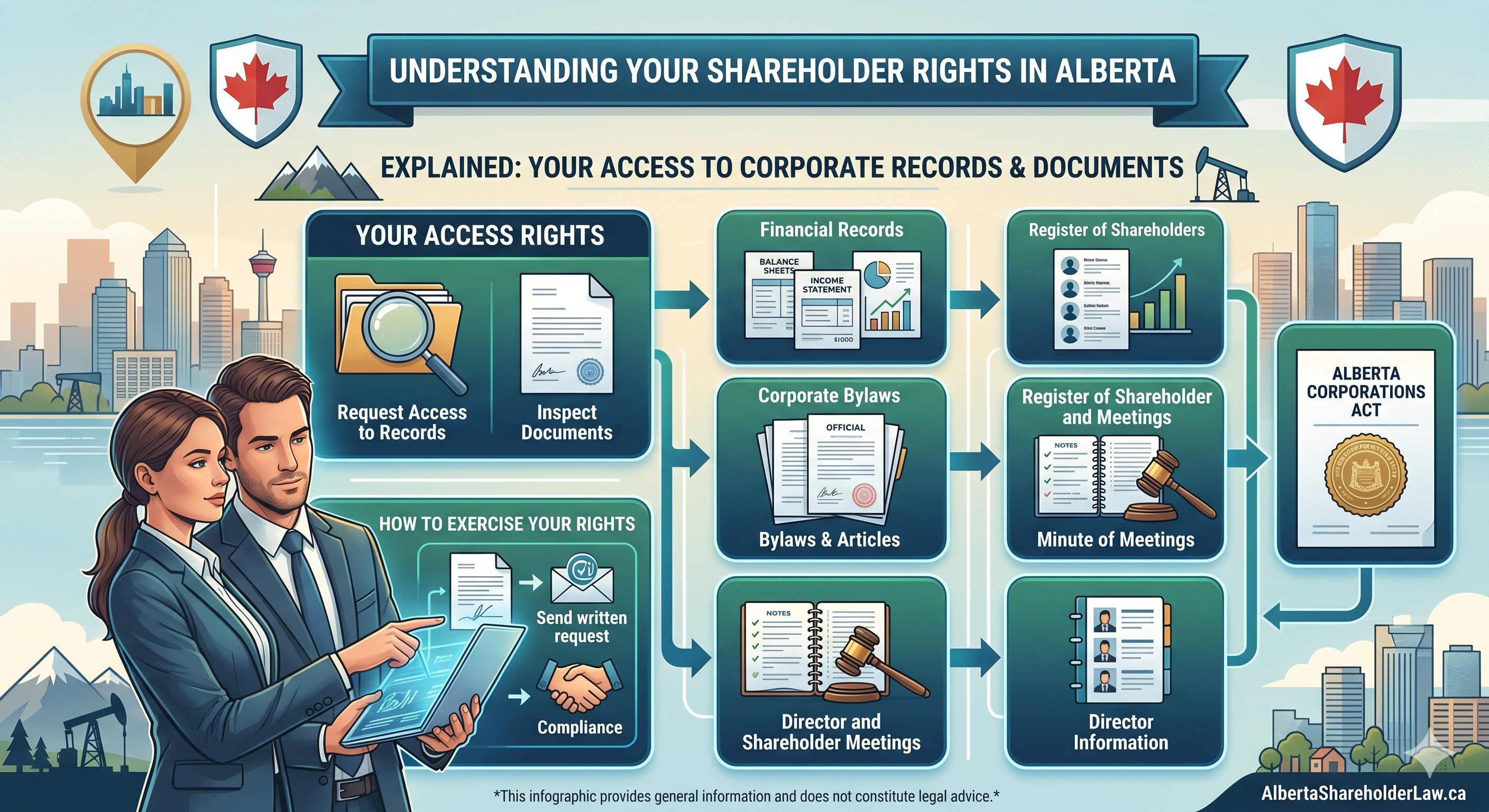
Shareholders often assume that owning shares gives them unlimited access to a corporation’s documents.
That is not always true.
In Alberta, shareholders have important rights to inspect certain corporate records, but those rights have limits. A shareholder may be entitled to review specific records connected to ownership, governance, and corporate structure. However, that does not necessarily mean they can demand every email, bank statement, accounting record, business plan, customer list, or internal director document.
This distinction matters. Access to corporate records can become a major issue when shareholders disagree, when a minority shareholder feels excluded, when business partners stop communicating, or when a corporation has not kept its minute book up to date.
Libra Law helps shareholders, directors, and corporations understand corporate records, shareholder rights, governance obligations, and practical next steps when records are missing, outdated, or being withheld.
Why Corporate Records Matter
Corporate records are the official documents that show how a corporation is structured, owned, managed, and maintained.
These records can help answer important questions, such as:
- Who owns shares in the corporation?
- What class of shares were issued?
- Who are the directors?
- Who are the officers?
- Were shares properly issued or transferred?
- Were major decisions approved?
- Are the articles and bylaws up to date?
- Is there a unanimous shareholder agreement?
- Has the corporation maintained its annual filings?
- Does the minute book match the corporation’s actual history?
When records are accurate, shareholders and directors can understand their rights and responsibilities. When records are incomplete or outdated, disputes become much harder to resolve.
For a broader overview, read Libra Law’s article on the Importance of Corporate Records in Alberta.
What Corporate Records Must an Alberta Corporation Keep?
An Alberta corporation is generally expected to keep core corporate records that document its legal existence, ownership, and governance.
These may include:
- Articles of incorporation
- Bylaws
- Amendments to articles or bylaws
- Shareholder resolutions
- Minutes of shareholder meetings
- Unanimous shareholder agreements
- Notices of directors
- Register of directors
- Register of shareholders
- Securities register
- Share certificates or records of share issuance
- Annual returns
- Corporate filings
- Minute book records
Corporations may also keep accounting records, tax records, director meeting minutes, officer records, contracts, banking documents, and other business records. However, not every internal business record is automatically available to every shareholder.
That is where many disputes begin.
What Records Can Shareholders Usually Access?
In Alberta, shareholders generally have the right to inspect certain corporate records during normal business hours. These rights are designed to help shareholders understand the corporation’s legal structure and ownership records.
Shareholders may commonly be able to access records such as:
- Articles of incorporation
- Bylaws
- Amendments to articles or bylaws
- Unanimous shareholder agreements
- Minutes of shareholder meetings
- Shareholder resolutions
- Director notices and changes
- Securities register
- Shareholder register
- Certain filed corporate documents
A shareholder may also be entitled to request a copy of certain foundational documents, such as the articles, bylaws, and unanimous shareholder agreement, if one exists.
These records can be especially important when there is a disagreement about share ownership, voting rights, corporate control, or whether the corporation has followed proper procedures.
What Records Are Shareholders Not Automatically Entitled To?
A shareholder’s right to inspect records is important, but it is not unlimited.
Shareholders are not automatically entitled to every internal corporate document simply because they own shares.
Depending on the circumstances, shareholders may not have an automatic right to access:
- Director meeting minutes
- Director resolutions
- Committee minutes
- Internal management records
- Accounting records
- Bank statements
- Customer lists
- Supplier contracts
- Employee files
- Legal advice received by the corporation
- Confidential business plans
- Internal emails
- Draft documents
- Records unrelated to shareholder rights
This can be frustrating for shareholders, especially minority shareholders who feel excluded from the business. However, corporate law distinguishes between ownership rights and management authority.
A shareholder owns shares. Directors supervise the management of the corporation. Officers often handle daily operations.
For more on these roles, read Libra Law’s article on Shareholders vs Directors vs Officers in Canada.
Shareholder Rights Are Not the Same as Director Rights
One common source of confusion is the difference between being a shareholder and being a director.
A shareholder may have ownership rights, including the right to vote on certain matters and inspect certain records. A director, on the other hand, has management and oversight responsibilities.
Directors may need broader access to corporate information to fulfill their duties. Shareholders may not have the same level of access unless they are also directors.
This matters in small private corporations where one person may be both a shareholder and director. If that person is removed as a director but remains a shareholder, their access rights may change.
For example, a former director who remains a shareholder may not be able to demand the same level of access they had while serving on the board.
If you are unsure which role applies, Libra Law’s guide on Directors’ Duties and Liability in Alberta can help explain why director status carries separate responsibilities and access needs.
Why Shareholders Request Corporate Records
Shareholders may request corporate records for many reasons.
Some requests are routine. Others happen because there is a dispute or concern about how the corporation is being managed.
Common reasons include:
- Confirming share ownership
- Reviewing voting rights
- Checking whether shares were properly issued
- Reviewing the corporation’s articles and bylaws
- Confirming who the directors are
- Understanding whether a unanimous shareholder agreement exists
- Preparing for a shareholder meeting
- Reviewing past shareholder resolutions
- Investigating concerns about corporate governance
- Preparing for a share sale or transfer
- Dealing with the death of a shareholder
- Resolving a shareholder dispute
- Responding to concerns about missing or outdated corporate records
A shareholder does not always need to be in a dispute to request records. Corporate transparency and proper recordkeeping are part of good governance.
Minority Shareholders and Access to Records
Minority shareholders often face the most difficulty accessing information.
A minority shareholder may own part of the corporation but have little or no involvement in daily operations. If the majority shareholder or directors stop sharing information, the minority shareholder may feel shut out.
This can create concerns about:
- Whether dividends are being declared fairly
- Whether corporate funds are being misused
- Whether shares were issued improperly
- Whether directors are acting in the corporation’s best interests
- Whether meetings or resolutions were handled properly
- Whether the shareholder’s ownership interest has been diluted
- Whether the corporation is being operated without transparency
Access to corporate records may help clarify some of these issues, but it may not answer every concern. If the dispute involves oppression, mismanagement, breach of fiduciary duty, or improper conduct, the shareholder may need broader legal advice.
What If the Corporation Refuses Access?
If a corporation refuses to provide access to records, the shareholder should not assume the matter is over.
The first step is usually to make a clear written request. The request should identify:
- The shareholder making the request
- The records being requested
- The basis for the request
- The requested inspection date or timeline
- Whether copies are being requested
- Where the response should be sent
A vague demand for “all company documents” may be easier for a corporation to reject or narrow. A specific request for records the shareholder is entitled to inspect is usually more effective.
If the corporation still refuses access, a lawyer can help assess whether the refusal is valid and what steps may be available.
Can a Corporation Charge a Fee?
A shareholder may be able to inspect certain records free of charge during normal business hours. However, fees may apply in some circumstances, especially where copies, extracts, or additional document production are requested.
The amount and availability of fees may depend on the type of record, the nature of the request, and the applicable corporate rules.
If a corporation is charging excessive fees or using cost as a barrier to access, the shareholder should seek legal advice.
Can Shareholders Demand Financial Statements?
Financial information can be more complicated.
Shareholders may have rights to receive or review certain financial statements in specific circumstances, especially in connection with annual meetings or shareholder approvals. However, that does not necessarily mean a shareholder can demand unlimited access to all accounting records, bank statements, invoices, payroll records, or internal financial documents.
The answer may depend on:
- Whether the corporation is private or public
- The corporation’s articles and bylaws
- Any shareholder agreement
- Whether the shareholder is also a director
- Whether financial statements were prepared
- Whether annual meetings were held or waived
- Whether there are allegations of misconduct
- Whether a court application or other remedy is being considered
Because financial record disputes can become serious, shareholders and corporations should get legal advice before taking aggressive positions.
What About Shareholder Agreements?
A shareholder agreement can expand, clarify, or limit certain information rights between shareholders.
For example, a shareholder agreement may address:
- What financial information must be shared
- How often reports must be provided
- Whether shareholders can inspect books and records
- Whether audited or unaudited statements are required
- What happens if a shareholder leaves the business
- How disputes over access are resolved
- Confidentiality obligations
- Restrictions on use of corporate information
If there is a shareholder agreement, it should be reviewed before any record request or refusal.
A shareholder agreement can be especially important in small corporations where the owners expect more transparency than the minimum required by law.
Confidentiality and Misuse of Information
Shareholders should be careful about how they use corporate records.
Accessing records does not mean a shareholder can misuse confidential information, share it with competitors, use it for an improper purpose, or interfere with the corporation’s business.
For example, a shareholder who receives access to corporate information should not use that information to damage the corporation, solicit customers improperly, or assist a competing business.
Corporations also have legitimate reasons to protect confidential and commercially sensitive information. The challenge is balancing shareholder rights with the corporation’s need to protect its business.
Corporate Records and Shareholder Disputes
Corporate record issues often appear during shareholder disputes.
A dispute may begin with a simple records request, but the real issue may be deeper. The shareholder may be concerned about exclusion, unfair treatment, dilution, misuse of funds, lack of dividends, or decisions being made without proper authority.
Common shareholder dispute issues include:
- One shareholder being excluded from information
- Disagreements over who owns shares
- Missing share certificates
- Improper share transfers
- Failure to hold meetings
- Decisions made without proper resolutions
- Majority shareholders ignoring minority rights
- Directors failing to document decisions
- Outdated or missing minute books
- Conflicts between family members or business partners
When records are incomplete, it can be difficult to determine what actually happened. This is why corporations should maintain proper records before a dispute arises.
Corporate Records and the Death of a Shareholder
Corporate records also become important when a shareholder dies.
The executor or personal representative may need to determine:
- How many shares the deceased owned
- What class of shares were held
- Whether the shares were voting or non-voting
- Whether there is a shareholder agreement
- Whether there are buy-sell provisions
- Whether the shares can be transferred
- Whether the corporation’s records match the will or estate documents
- Whether other shareholders have purchase rights
If the records are incomplete, the estate administration process can become delayed or disputed.
This is one reason business owners should make sure corporate records and estate planning documents work together.
Corporate Records and Buying or Selling a Business
If a corporation is being bought or sold, corporate records become critical.
A purchaser, lender, accountant, or lawyer may ask to review the minute book and corporate records before completing the transaction.
Missing records can delay or complicate a sale. They may also raise concerns about whether shares were properly issued, whether directors approved key decisions, or whether the seller has authority to complete the transaction.
Before selling shares or bringing in a buyer, a corporation should review and update its records.
If you are setting up or restructuring a corporation, Libra Law’s article on Do I Need a Lawyer to Incorporate? explains why legal guidance can help prevent problems from the start.
Common Mistakes Corporations Make
Corporations often make avoidable mistakes with shareholder access and corporate records.
Common mistakes include:
- Failing to keep a current minute book
- Not maintaining a proper shareholder register
- Issuing shares without proper resolutions
- Losing track of share certificates
- Failing to update director information
- Not keeping articles and bylaws organized
- Ignoring shareholder requests
- Refusing access without understanding the law
- Providing too much confidential information without review
- Treating minority shareholders as if they have no rights
- Failing to document shareholder resolutions
- Not reviewing shareholder agreements before responding
- Waiting until litigation begins to update records
These mistakes can create unnecessary conflict and legal risk.
Common Mistakes Shareholders Make
Shareholders can also make mistakes when requesting records.
Common mistakes include:
- Demanding every corporate document without legal basis
- Confusing shareholder rights with director rights
- Making emotional or hostile requests
- Failing to put the request in writing
- Not identifying the specific records requested
- Misusing confidential information
- Assuming ownership of shares means ownership of corporate assets
- Ignoring the shareholder agreement
- Waiting too long to address concerns
- Trying to resolve complex disputes without legal advice
A focused and legally grounded request is usually more effective than a broad demand.
Practical Steps for Shareholders Requesting Records
If you are a shareholder seeking access to corporate records, consider the following steps:
- Confirm your shareholder status.
- Review any shareholder agreement.
- Identify the specific records you want to inspect.
- Make your request in writing.
- Keep the tone professional.
- Ask for a reasonable inspection time.
- Request copies only where appropriate.
- Keep records of all communications.
- Avoid using corporate information for improper purposes.
- Speak with a lawyer if the corporation refuses access.
A clear process can help reduce unnecessary conflict and preserve your legal position.
Practical Steps for Corporations Responding to Requests
If your corporation receives a shareholder records request, consider the following steps:
- Do not ignore the request.
- Confirm that the person is a shareholder or authorized representative.
- Review the specific documents being requested.
- Check the corporation’s articles, bylaws, and shareholder agreement.
- Determine which records must be made available.
- Protect confidential information where appropriate.
- Respond in writing.
- Keep a record of what was provided or inspected.
- Update the minute book if records are missing or outdated.
- Speak with a lawyer before refusing access.
Responding properly can help avoid unnecessary disputes and show that the corporation takes its governance obligations seriously.
How Libra Law Can Help
Shareholder access to corporate records can seem straightforward until there is disagreement about what must be provided, what can be withheld, and how the information may be used.
Libra Law helps shareholders, directors, and corporations understand their rights and obligations when corporate records are requested or disputed.
Our team can assist with:
- Shareholder record requests
- Corporate record reviews
- Minute book updates
- Shareholder disputes
- Director and officer issues
- Share ownership concerns
- Share transfers
- Corporate governance advice
- Shareholder agreements
- Business law disputes
- Corporate restructuring
Whether you are a shareholder trying to access records or a corporation trying to respond properly, Libra Law can help you understand the next step.
Visit our business law services page or contact Libra Law to discuss your corporate records issue.
This article is for general informational purposes only and does not constitute legal advice. To obtain advice specific to your situation, please consult a lawyer or qualified professional.
FAQs About Shareholder Rights and Corporate Records in Alberta
Can shareholders inspect corporate records in Alberta?
Yes. Shareholders generally have the right to inspect certain corporate records, such as articles, bylaws, shareholder resolutions, and certain ownership and governance records.
Can a shareholder access all accounting records?
Not automatically. Shareholders do not usually have an unlimited right to inspect all accounting records, bank statements, invoices, or internal financial documents unless another legal right, shareholder agreement, or court process applies.
Can a shareholder get a copy of the bylaws?
A shareholder may generally request a copy of foundational corporate documents such as the articles, bylaws, and any unanimous shareholder agreement.
What should I do if the corporation refuses to provide records?
Start by making a clear written request that identifies the specific records you want to inspect. If the corporation refuses or ignores the request, speak with a lawyer about your options.
Are shareholder rights different from director rights?
Yes. A shareholder has ownership rights, while a director has management and oversight responsibilities. Directors may need broader access to information to fulfill their duties, but shareholders do not automatically have the same access unless they are also directors.
