Hiring Foreign Workers in Canada: Employer Compliance Requirements, Inspections, and Penalties
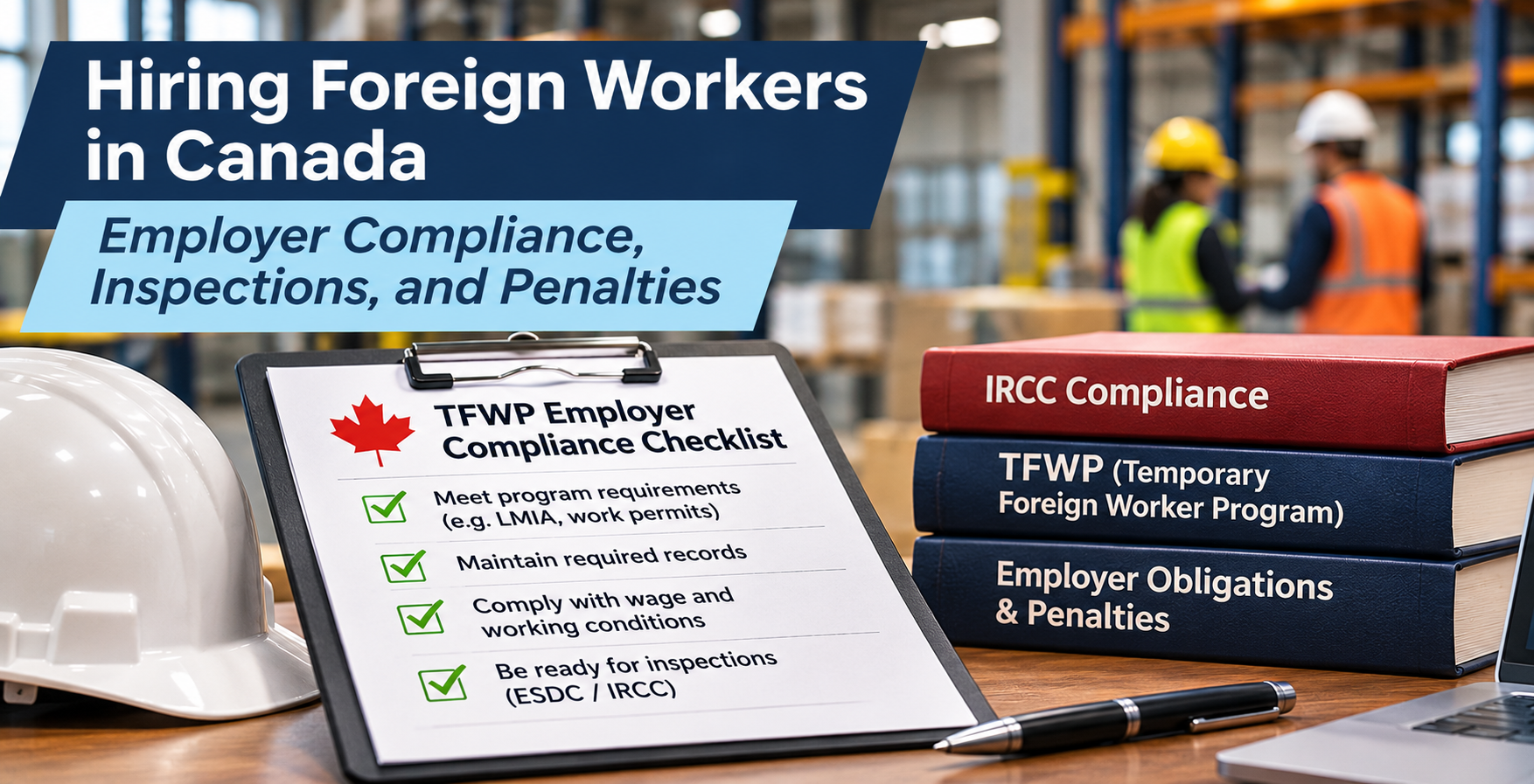
Hiring a foreign worker is not a one-time approval. Once the worker arrives, the employer takes on ongoing obligations that can be inspected for years afterward.
Many employers focus heavily on getting the Labour Market Impact Assessment or work permit approved, then treat the file as closed. That is where compliance problems often begin.
Federal enforcement has also increased. Employment and Social Development Canada reported that from April 1, 2025 to March 31, 2026, the Temporary Foreign Worker Program finalized 1,488 compliance inspections and found 12% of inspected employers non-compliant. Over $10.2 million in monetary penalties were issued, more than double the previous year's $4.5 million, and 30 employers were banned from the program.
This guide from Libra Law's Immigration Law team explains the compliance conditions employers must meet, how inspections work, and what penalties can follow. If you are earlier in the process, start with our guide to hiring foreign workers in Alberta.
Two Programs, Two Inspection Systems
Foreign workers in Canada are generally hired through one of two federal programs.
The Temporary Foreign Worker Program applies where the employer needs a Labour Market Impact Assessment, often called an LMIA. Compliance is overseen by Employment and Social Development Canada, with inspections carried out through Service Canada.
The International Mobility Program applies to LMIA-exempt hiring, such as certain trade agreement or intra-company transfer categories. Compliance is overseen by Immigration, Refugees and Citizenship Canada.
The conditions are similar in both programs, and both can impose penalties and bans.
Core Employer Conditions
While the exact conditions depend on the program and the type of work permit, employers generally must:
- provide the same occupation described in the offer of employment
- pay wages and provide working conditions substantially the same as, but not less favourable than, those set out in the offer
- comply with federal and provincial laws regulating employment and recruitment
- make reasonable efforts to provide a workplace free of abuse
- be actively engaged in the business in respect of which the offer was made
- keep documents that demonstrate compliance
- provide documents and attend interviews when requested during an inspection
- avoid charging or recovering recruitment fees from the worker
Some streams carry additional commitments, such as transportation costs, health coverage until provincial coverage begins, or help finding suitable housing.
How Long Records Must Be Kept
Employers are generally required to retain compliance records for six years from the first day of the period of employment. Inspections can reach back over that period.
Records to keep typically include:
- the signed employment agreement and offer of employment
- payroll records, pay stubs, and proof of payment
- time sheets and schedules
- records of any changes to duties, wages, or hours
- recruitment and advertising records
- workplace policies and training records
- correspondence with the worker
How Inspections Work
An employer can be selected for an inspection for different reasons, including:
- a reason to suspect non-compliance, such as a tip or complaint
- a history of non-compliance
- random selection
Inspections can involve document requests, interviews with the employer and workers, and in some cases on-site visits, which may be unannounced.
Officers compare what the employer promised in the LMIA or offer of employment against what actually happened. Even small differences, such as fewer hours than promised, a lower wage rate, or a different job title in practice, can be flagged.
Justified Non-Compliance
Not every discrepancy leads to a penalty. The regulations set out specific justifications an employer can rely on. Examples include:
- an error made in good faith by the employer
- a change in federal or provincial law
- a change to the provisions of a collective agreement
In some cases, the employer must also remedy the effect of the violation, for example by compensating a worker for unpaid wages. Justification depends on evidence. Employers who identify and correct a problem before an inspection, and document how they fixed it, are in a stronger position.
Penalties for Non-Compliance
Consequences depend on the seriousness of the violation, the employer's compliance history, and the size of the business. They can include:
- warning letters
- administrative monetary penalties ranging from $500 to $100,000 per violation, to a maximum of $1 million in one year
- bans from hiring through the programs of 1, 2, 5, or 10 years, or permanently
- publication on the public list of non-compliant employers
- revocation of LMIAs or suspension of processing
A violation that affects more than one worker can be counted separately for each worker, so penalties can grow quickly.
Recent examples published by ESDC include a Manitoba long-haul trucking employer fined $240,000 and banned for five years, and a Nova Scotia restaurant employer fined $126,000 and banned for two years.
A ban has practical consequences. A banned employer cannot obtain new approvals for foreign workers during the ban, which can be serious for businesses that rely heavily on foreign workers.
Compliance Risk When Buying a Business
Compliance obligations can also become a buyer's problem. A business with foreign workers may carry past non-compliance that is discovered after closing.
Buyers should review foreign worker files, payroll, and employment agreements during due diligence. Our article on buying a business that employs foreign workers explains what to look for.
Building a Compliance System
Employers can reduce risk significantly with a simple, repeatable process:
1. Keep a file for each worker
Store the LMIA or offer of employment, work permit, contract, and all payroll records together.
2. Compare promises to practice
Every few months, check actual wages, hours, and duties against the offer. Correct gaps immediately.
3. Control changes
Before changing a worker's duties, location, hours, or wages, confirm whether the change is permitted under the work permit and offer.
4. Train managers
Supervisors should understand that the offer terms are binding commitments, not estimates.
5. Respond to inspections promptly and carefully
Inspection requests have deadlines. Provide complete, organized records, and get advice before responding if there are known issues.
Frequently Asked Questions
How long can the government inspect my foreign worker files?
Inspections can generally cover a period of up to six years from the first day of the worker's employment, which is also the record retention period.
Can an inspection happen without notice?
Yes. While many inspections begin with a document request, on-site visits can occur and may be unannounced.
What is the maximum penalty for non-compliance?
Administrative monetary penalties can range from $500 to $100,000 per violation, up to $1 million in a year, and employers can be banned for set periods or permanently.
What happens if I make an honest mistake?
An error made in good faith is one of the justifications recognized in the regulations, and in some cases the employer must also remedy the effect, such as by paying wages owed. Documentation is important.
Final Thoughts
Hiring a foreign worker creates obligations that last well beyond the approval stage. Inspections compare what the employer promised with what actually happened, and recent enforcement shows penalties are increasing.
Employers who keep organized records, review compliance regularly, and correct problems early are in the best position if an inspection arrives.
Libra Law's Immigration Law team helps employers set up compliance systems, respond to inspections, and address non-compliance findings.
Speak with an immigration lawyer at Libra Law before responding to a compliance inspection or changing a foreign worker's job terms.
Disclaimer: This article is for general informational purposes only and does not constitute legal advice. To obtain advice specific to your situation, please consult a lawyer or qualified professional.
