What Happens When an Executor Named in a Will Refuses to Act in Alberta?
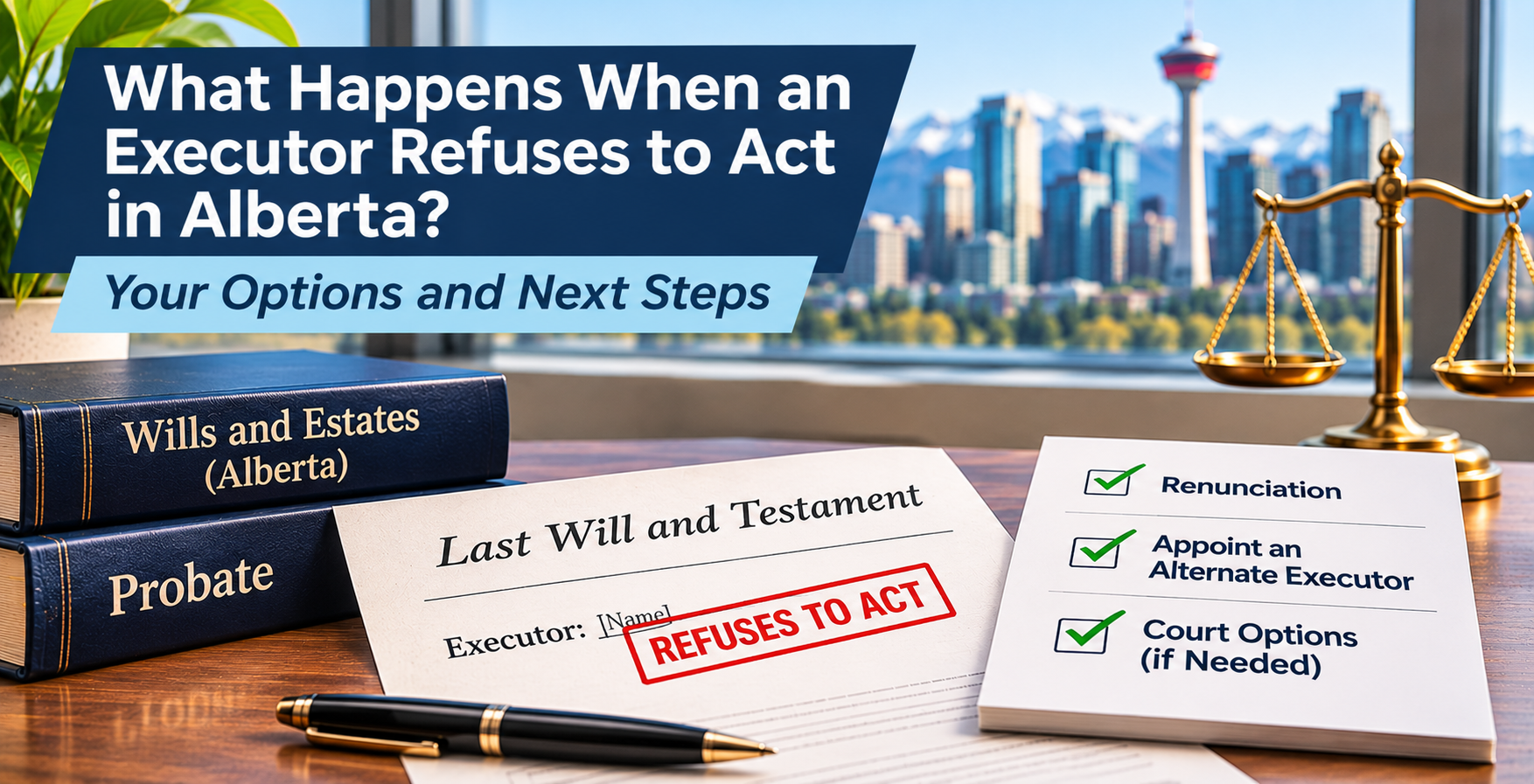
Being named as an executor in a will is an honour, but it is not an obligation. Some people decide they do not want the role. Others agree at first, then stall.
When the person named in the will does not act, the estate can sit untouched. Bills go unpaid, property is left unprotected, and beneficiaries are left waiting with no clear path forward.
Alberta law provides options for each of these situations.
This guide from Libra Law's Wills & Estates team explains what happens when an executor refuses to act, how a named executor can step aside properly, and what beneficiaries can do when an executor will not move the estate forward.
Is a Named Executor Required to Act?
No. Being named in a will does not legally oblige someone to accept the role.
A person might decline because of:
- distance from where the deceased lived or where the assets are located
- health, age, or personal circumstances
- the size or complexity of the estate
- an estate that appears to be insolvent
- family conflict they do not want to be part of
- concerns about personal liability
Declining is a legitimate choice. The important thing is to do it properly and promptly.
Renouncing: How a Named Executor Steps Aside
A named executor who does not want to act can formally renounce the appointment. In Alberta, this is done through a written renunciation that is filed with the court as part of the probate process.
Renunciation is generally straightforward if the person has not yet started acting as executor.
The intermeddling problem
If the named executor has already begun dealing with the estate, for example by accessing accounts, selling property, paying debts, or distributing belongings, they may be treated as having accepted the role.
At that point, a simple renunciation may no longer be available. The person may need a court order to be released, and they may be required to account for what they have done.
Anyone who is unsure whether they want to act should get advice before taking any steps with estate property.
What Happens After an Executor Renounces?
The next step depends on what the will says.
If the will names an alternate executor
Many wills name a second choice. If the first executor renounces, the alternate is usually entitled to apply for probate.
If there are co-executors
If two or more executors were named together and one renounces, the remaining executor or executors may be able to proceed, depending on the wording of the will.
If no one named in the will can act
If no named executor is willing or able to act, another person can apply to the court to administer the estate according to the will. This is often called a grant of administration with will annexed.
Alberta's rules set out who has priority to make this type of application, which often includes beneficiaries under the will. The court will generally want consent or notice from others with an equal or higher right to apply.
What If the Executor Will Not Renounce but Also Will Not Act?
This is often the most frustrating situation for beneficiaries.
The executor may have accepted the role in principle but done nothing for months. They may ignore calls and emails, refuse to provide information, or delay without explanation.
Beneficiaries have options:
1. Make a clear written request
Start with a written request asking the executor to confirm whether they will act, and if so, when they intend to apply for probate or take the next step. Keep the tone factual and keep a copy.
2. Ask the executor to renounce
Sometimes an executor is overwhelmed and relieved to be given a clear way out. A formal renunciation allows someone else to step in.
3. Apply to the court
If the executor neither acts nor renounces, an interested person can apply to the Court of King's Bench of Alberta. Depending on the circumstances, the court may require the executor to apply for probate or renounce, or may appoint someone else.
Can an Executor Be Removed?
Yes. If an executor has accepted the role but is not properly carrying it out, the court can remove them and appoint a replacement.
Courts do not remove executors lightly. The person who appointed them chose them for a reason. Removal is more likely where there is evidence that the executor:
- has unreasonably delayed administration
- has failed to protect estate assets
- refuses to provide information or account to beneficiaries
- has a conflict of interest that is harming the estate
- has mismanaged or misused estate property
- is unable to act because of incapacity or other circumstances
Disagreement or personality conflict alone is usually not enough. The focus is on whether the estate is being properly administered.
Our guide to executor duties in Alberta explains what a properly acting executor is expected to do.
Protecting the Estate in the Meantime
While the question of who will act is being resolved, estate assets can be at risk. A vacant house may need insurance and maintenance, investments may need to be monitored, and a business may need someone to keep it running.
In urgent situations, the court can make orders to preserve estate property before a final decision is made about who should administer the estate.
Practical Tips for Named Executors
If you have been named in a will:
- decide early whether you are willing to act
- avoid handling estate property until you have decided
- if you will not act, renounce promptly so others can move forward
- if you will act, keep beneficiaries informed and move steadily through the process
If you are willing to act but uncertain about the process, our guide to probate in Alberta explains the main steps and where legal help can make a difference.
Frequently Asked Questions
Can I refuse to be an executor in Alberta?
Yes. A named executor is not required to accept the role and can formally renounce, ideally before taking any steps to deal with the estate.
Can a named executor appoint someone else to replace them?
Generally, no. An executor cannot simply choose their own replacement. The will, the court, and Alberta's priority rules determine who can act next.
What can beneficiaries do if the executor is doing nothing?
Beneficiaries can request action in writing, ask the executor to renounce, and if needed apply to the court for an order requiring the executor to act or for the appointment of someone else.
How long does an executor have to apply for probate in Alberta?
There is no fixed deadline in every case, but executors are expected to administer the estate with reasonable diligence. Long unexplained delays can support a court application.
Final Thoughts
An executor who refuses to act does not leave an estate without options. A named executor can step aside properly, an alternate can step in, and the court can appoint someone else or remove an executor who is not doing the job.
Acting early matters. The longer an estate sits, the greater the risk to its assets and the more difficult relationships between family members can become.
Libra Law's Wills & Estates team helps named executors decide whether to act, prepares renunciations, and assists beneficiaries when an estate has stalled.
Book a Wills & Estates consultation with Libra Law if you have been named as an executor or are waiting on one who has not acted.
Disclaimer: This article is for general informational purposes only and does not constitute legal advice. To obtain advice specific to your situation, please consult a lawyer or qualified professional.
