Termination Day Pressure: When a Signed Employment Release May Be Unenforceable
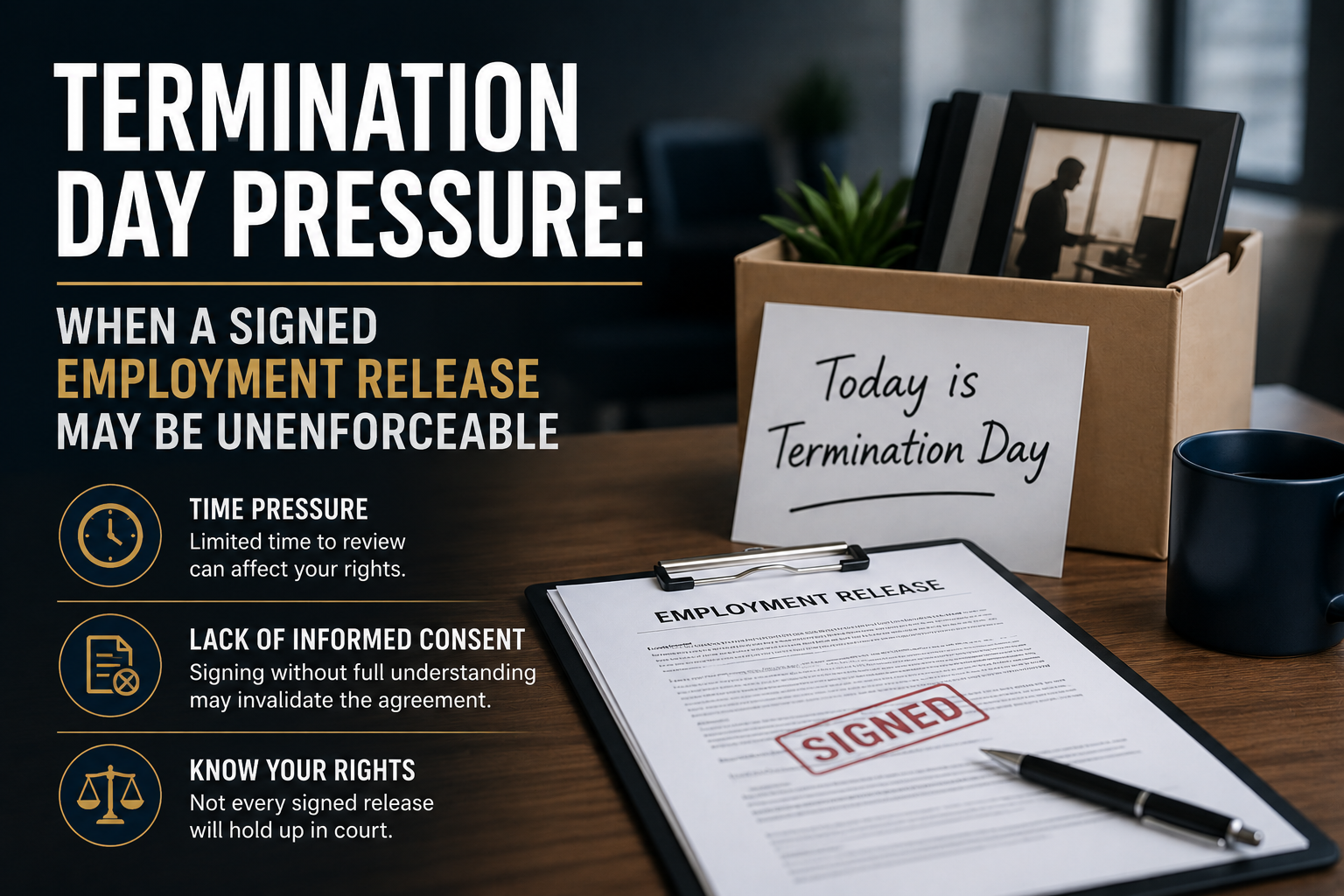
Termination meetings are stressful, and employers often present a release at the same time they deliver the news, sometimes asking the employee to sign on the spot in exchange for a severance offer. Employees frequently sign because they feel they have no choice. What many people do not realize is that a release signed under intense pressure is not always enforceable. The circumstances surrounding the signature can matter as much as the signature itself.
What an Employment Release Is
A release is a contract in which an employee gives up the right to sue the employer over the termination, usually in exchange for a severance payment. Employers use releases to achieve finality and avoid a later wrongful dismissal claim. When validly signed, a release can be a complete defence to such a claim, which is precisely why employees should understand what they are agreeing to before signing.
Why Pressure Can Undermine a Release
Courts will not always uphold a release simply because an employee signed it. Several factors can call a release into question:
- Lack of time to consider. Demanding a signature on the spot, without a reasonable opportunity to review the document or seek advice, can weigh against enforceability.
- No independent legal advice. Where an employee was given no chance to consult a lawyer, courts may scrutinize the release more closely.
- Unconscionability. If there was a significant inequality of bargaining power and the resulting deal was substantially unfair, a court may decline to enforce the release.
- Insufficient consideration. A release must be supported by something of value beyond what the employee was already legally owed. Offering only the minimum statutory entitlements may not be enough.
- Duress. Improper pressure that overwhelms a person's free will can render a release voidable.
The Consideration Problem
A recurring issue is whether the employee received genuine consideration. If the severance offered merely matches the minimum termination entitlements the employer was already required to provide, a court may find the release lacks fresh consideration and refuse to enforce it. This connects to a broader principle in employment law that new promises generally require something new in return.
What Employees Should Do
If you are handed a release on termination day, you are generally not obligated to sign immediately. Taking the document home, reading it carefully, and obtaining legal advice before signing is reasonable and prudent. A lawyer can assess whether the severance offered reflects your true entitlements, which often exceed the statutory minimums based on factors such as your age, length of service, and position.
What Employers Should Do
Employers who want enforceable releases should provide a fair offer, allow reasonable time to consider it, and recommend that the employee obtain independent legal advice. A release prepared and presented properly is far more likely to hold up than one extracted under pressure.
Severance Is Often More Than the Minimum
A central reason releases are scrutinized is that employees frequently do not realize how much they may be owed. In Alberta, employment standards set a statutory minimum for termination pay, but a dismissed employee without a valid enforceable termination clause may be entitled to common law reasonable notice, which is often substantially greater. Factors such as length of service, age, the character of the position, and the availability of similar work all influence what is reasonable. An employer's first offer, paired with a release, sometimes reflects only the statutory floor.
Get Advice Before You Sign
A signature does not always equal an enforceable agreement, and the days after termination are an important window to understanding your rights. If you have been asked to sign an employment release in Calgary, contact Libra Law before you sign, learn more about our employment law services, or read related guidance in our articles.
