Asset Purchase vs Share Purchase in Alberta
When buying or selling a business in Alberta, one of the most important legal decisions is how the transaction is structured. In most cases, deals are completed as either an asset purchase or a share purchase—and that choice can significantly affect liability, taxes, employment obligations, and long-term risk.
There is no one-size-fits-all answer. The right structure depends on the nature of the business, the parties involved, and how risk is allocated. This guide explains the key differences between asset and share purchases in Alberta, the legal and practical implications of each, and when legal advice is essential.
Understanding the Two Deal Structures
What Is an Asset Purchase?
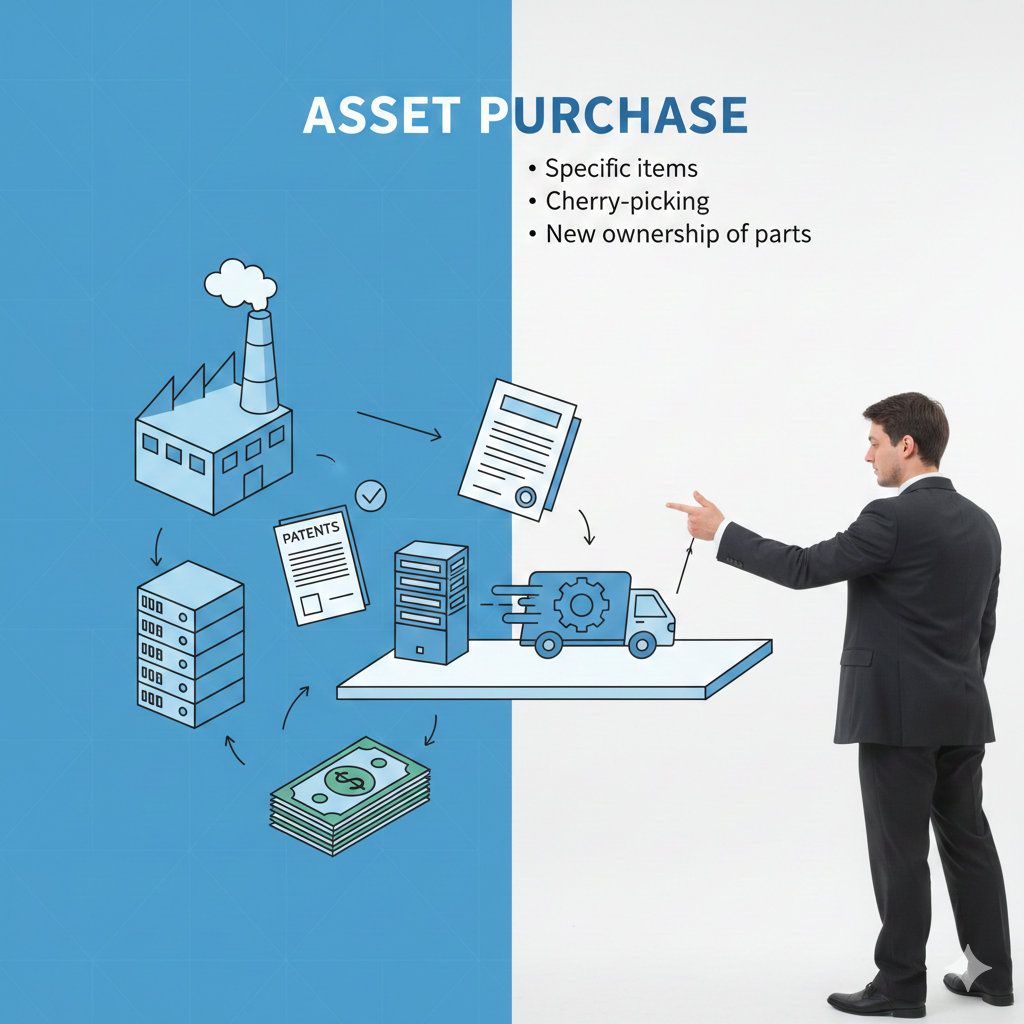
In an asset purchase, the buyer acquires specific assets of the business rather than the corporation itself. These assets may include:
- Equipment and inventory
- Intellectual property
- Contracts and customer lists
- Real estate or lease interests
The seller keeps the corporation and any liabilities not expressly assumed by the buyer.
What Is a Share Purchase?
In a share purchase, the buyer acquires the shares of the corporation, meaning ownership of the business transfers in full. This includes:
- All assets
- All liabilities, whether known or undiscovered
- Existing contracts and obligations
The corporation continues unchanged, but control shifts to the buyer.
Key Differences That Matter in Alberta Transactions
1. Liability and Risk Exposure
Liability is often the deciding factor when choosing a deal structure.
- Asset purchases allow buyers to limit risk by selecting which liabilities they will assume.
- Share purchases transfer all corporate liabilities to the buyer, including historical tax, employment, and contractual issues.
Because of this, buyers often prefer asset purchases, while sellers frequently push for share purchases.
2. Employment Law Considerations
In Alberta, asset purchases can trigger successor employer obligations, which may affect:
- Employee length of service
- Termination and severance entitlements
- Existing employment agreements
Share purchases typically preserve employment relationships automatically, since the employer remains the same legal entity.
Additional complexity arises if the business employs foreign workers. Ownership changes may affect compliance with immigration and work permit requirements.
Related reading: buying a business that employs foreign workers.
3. Tax Treatment
Tax implications often influence how deals are structured.
- Asset purchases may allow buyers to allocate value to depreciable assets, offering potential tax advantages.
- Share purchases are often more tax-efficient for sellers, particularly where the lifetime capital gains exemption applies.
Because tax and legal issues are closely connected, coordinated professional advice is critical before finalising a structure.
4. Contracts, Licences, and Third-Party Consents
In asset purchases, many contracts and licences must be assigned, which often requires third-party consent. This can include:
- Commercial leases
- Supplier or customer agreements
- Municipal or regulatory licences
In share purchases, contracts generally remain in place, although change-of-control clauses may still apply. Either way, careful due diligence is required.
5. Corporate Records and Ongoing Compliance
In a share purchase, the buyer inherits the corporation’s entire legal history. This makes the condition of corporate records especially important.
Incomplete or outdated records can expose buyers to unexpected risk.
Related reading: the importance of corporate records in Alberta.
Which Structure Is Right for You?
There is no universally “better” option. In practice:
- Buyers often prefer asset purchases to manage risk
- Sellers often prefer share purchases for tax efficiency and simplicity
The final structure is usually the result of negotiation, risk tolerance, and commercial leverage.
A business lawyer can help you:
- Identify hidden liabilities
- Evaluate employment and regulatory risks
- Structure the transaction to align with your business goals
- Draft and negotiate agreements that protect your interests
Why Legal Advice Is Essential Before You Commit
Asset and share purchase agreements involve complex legal issues, including:
- Representations and warranties
- Indemnities and limitations of liability
- Closing conditions
- Post-closing obligations
Working with an experienced Alberta lawyer ensures these issues are addressed before they become costly disputes.
Learn more about how Libra Law supports clients through acquisitions and corporate transactions through our business law services in Alberta.
Ready to Move Forward with Confidence?
Whether you are buying or selling a business, choosing the right deal structure can have lasting legal and financial consequences. The business law team at Libra Law provides clear, practical guidance to help clients navigate asset and share purchases with confidence.
If you are considering a transaction, you can contact our firm to discuss your business purchase or sale and take the next step with clarity.
This article is for general informational purposes only and does not constitute legal advice. To obtain advice specific to your situation, please consult a lawyer or qualified professional.
